The Strategy
Fixing Keyword Cannibalisation
The client’s website had multiple pages that covered very similar topics.
This led to keyword cannibalisation – which is where several web pages on your site compete for the same keywords and as a result, none are able to rank to their potential.
One way to find potential keyword cannibalistion is via Ahrefs Organic Keywords report.
- Enter your domain into Site Explorer and click on Organic keywords.
- Filter the keywords so that you’re only looking at queries where you’re ranking in position 11 and above.
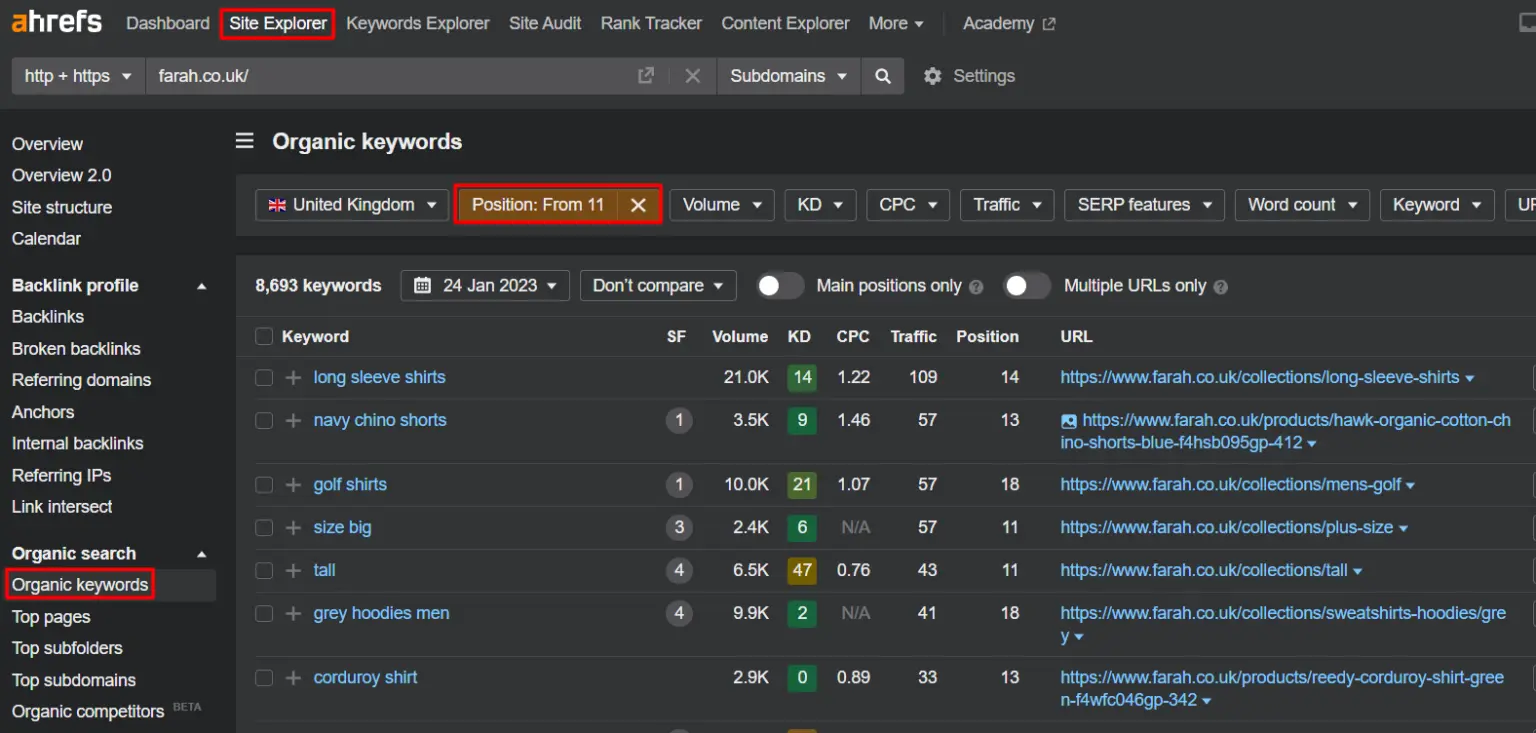
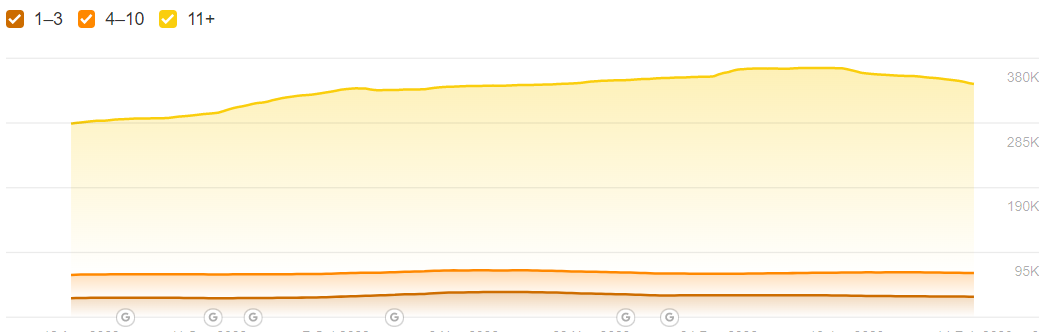
- Go through the keywords and click on the small graph icon on the right of the screen. This will show you the position history of your site, for the chosen keyword.
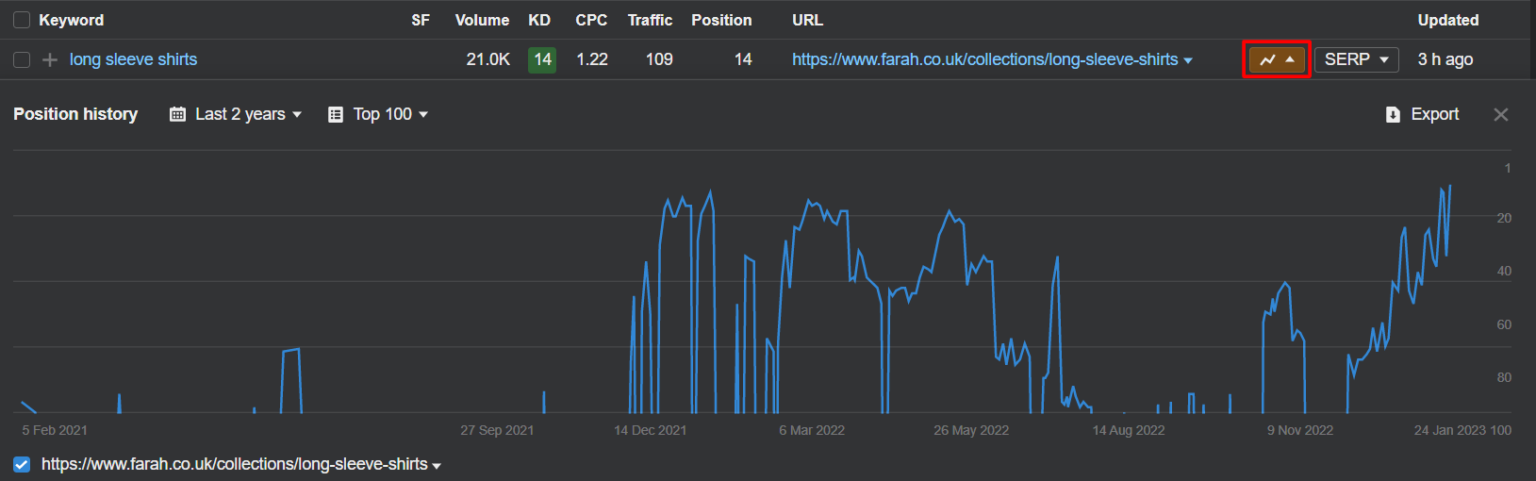
Each line on the graph represents a unique URL.
In this case, there is just one line, which means that there is no cannibalisation.
However, if you see a graph with multiple lines (like the one below), then there is potential cannibalisation.
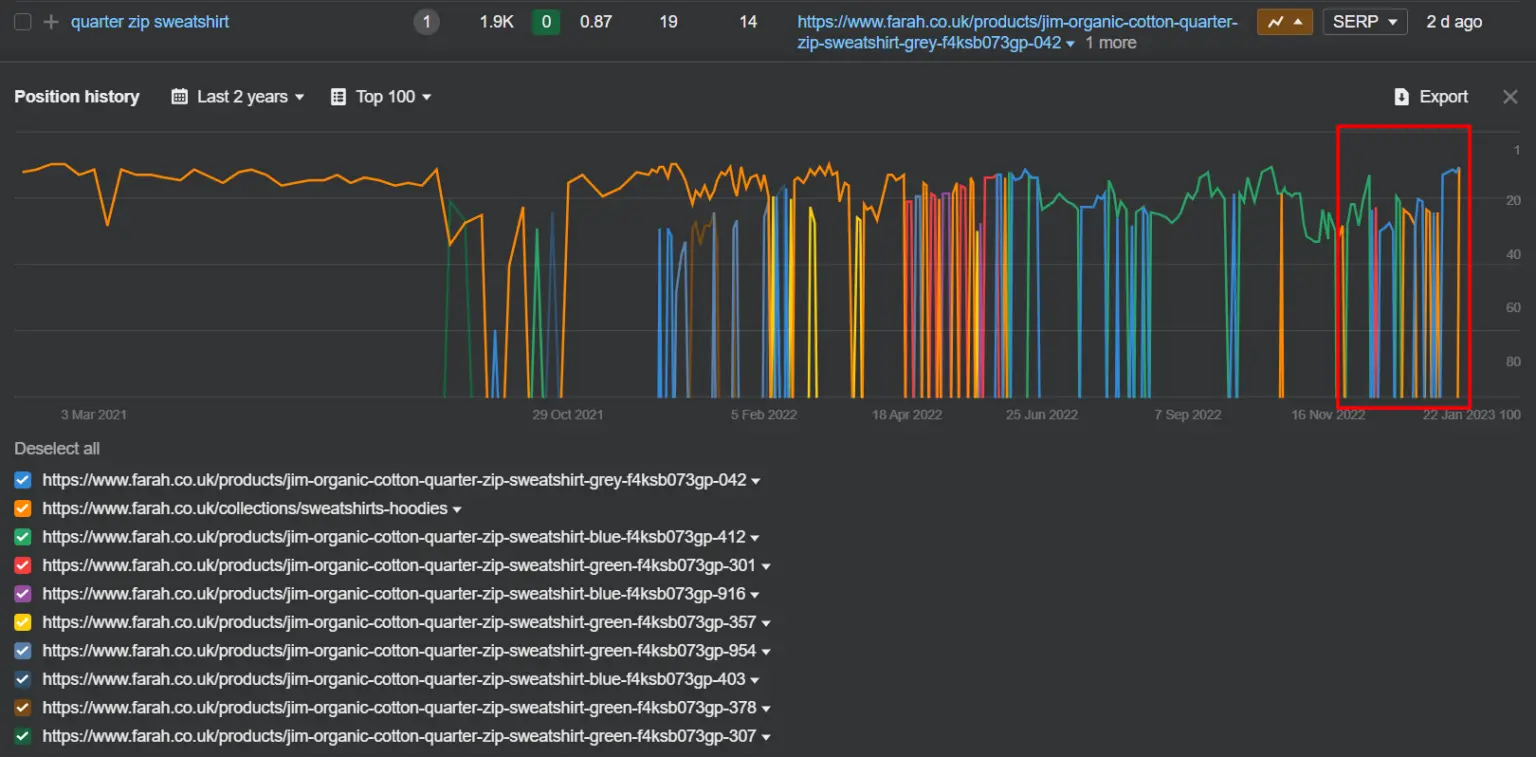
You can see that Google has switched between multiple URLs for this keyword and that importantly, the site has always struggled to break into the top 10 positions as a result of this.
Keyword cannibalisation can be fixed in several ways, i.e. implementing canonical tags or 301 redirects, but in the case of this client, we added internal links from the less relevant web page to the more relevant web page to give Google stronger signals about the main URL that we wanted to map for the target keyword.
Recovering Lost Featured Snippets
The client had lost many featured snippet ranking positions for keywords that required instant answers, which resulted in a significant loss of organic traffic.
This is because featured snippets are displayed at the top of the search results page, meaning users are more likely to click on them.
Here’s an example of a keyword where Google presents the user with a direct answer to the query: “how tall is the Burj Khalifa”.
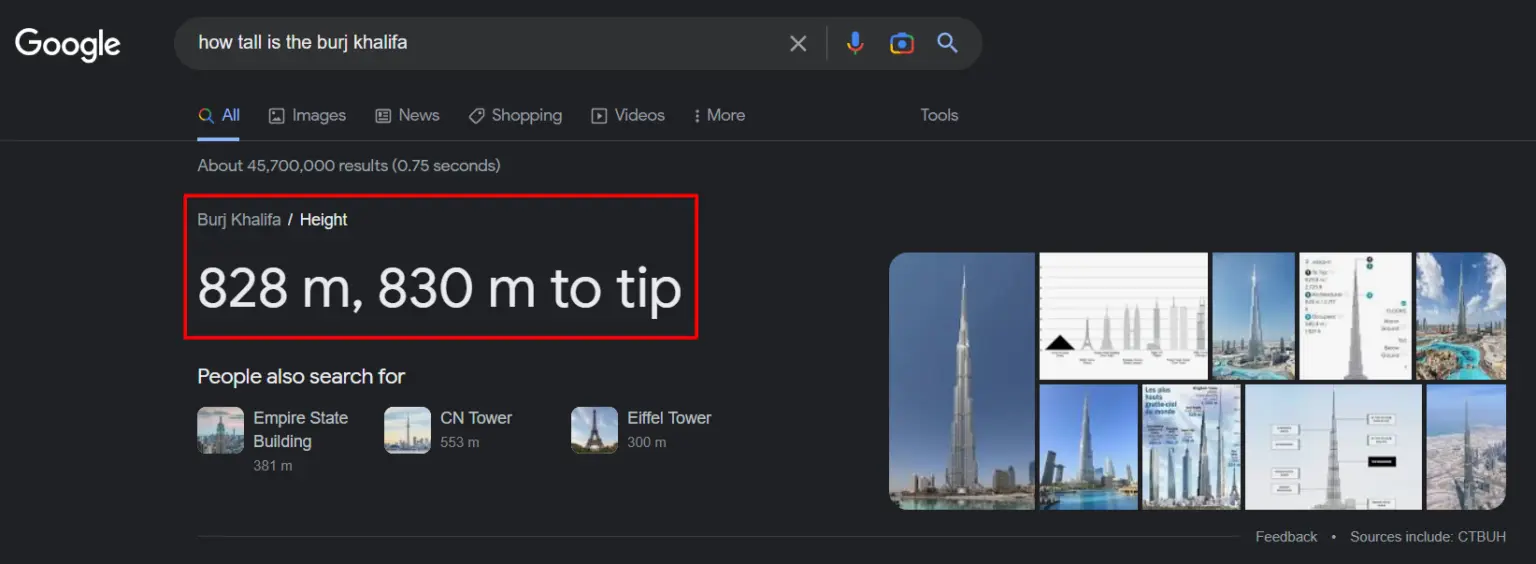
It may sound obvious, but you need to provide a clear, direct answer to the user’s search query within your first couple of sentences in order to increase your chances of appearing in the featured snippet spot.
For example, with the query “how tall is the Burj Khalifa”, the first sentence should be something like: “The Burj Khalifa is 830 metres tall, up to the tip”. This makes it clear to Google that you’re answering the question.
You can then go into a little more detail to make sure that the rest of your answer is in depth and that your answer is still comprehensive.
To recover these lost positions for our client, we also made sure that the most important content (i.e. the direct answer) related to the keyword was positioned as close to the top of the page as possible. This increased the chances of Google seeing that the site was providing the information that the user was looking for.
On-Page Optimisation
Google looks at the page title, H1 heading, meta description and URL to gain contextual cues about what your web page is about and which keywords it may be suitable for. Therefore, optimising the on-page elements of a web page is one of the first steps in making sure your website is SEO-friendly.
We focused on optimising the on-page meta data of URLs that were underperforming due to a loss of traffic.
You can find these URLs from Ahrefs Top pages report, where you can then filter the results by selecting the “Declined” option under the “Traffic” drop down.
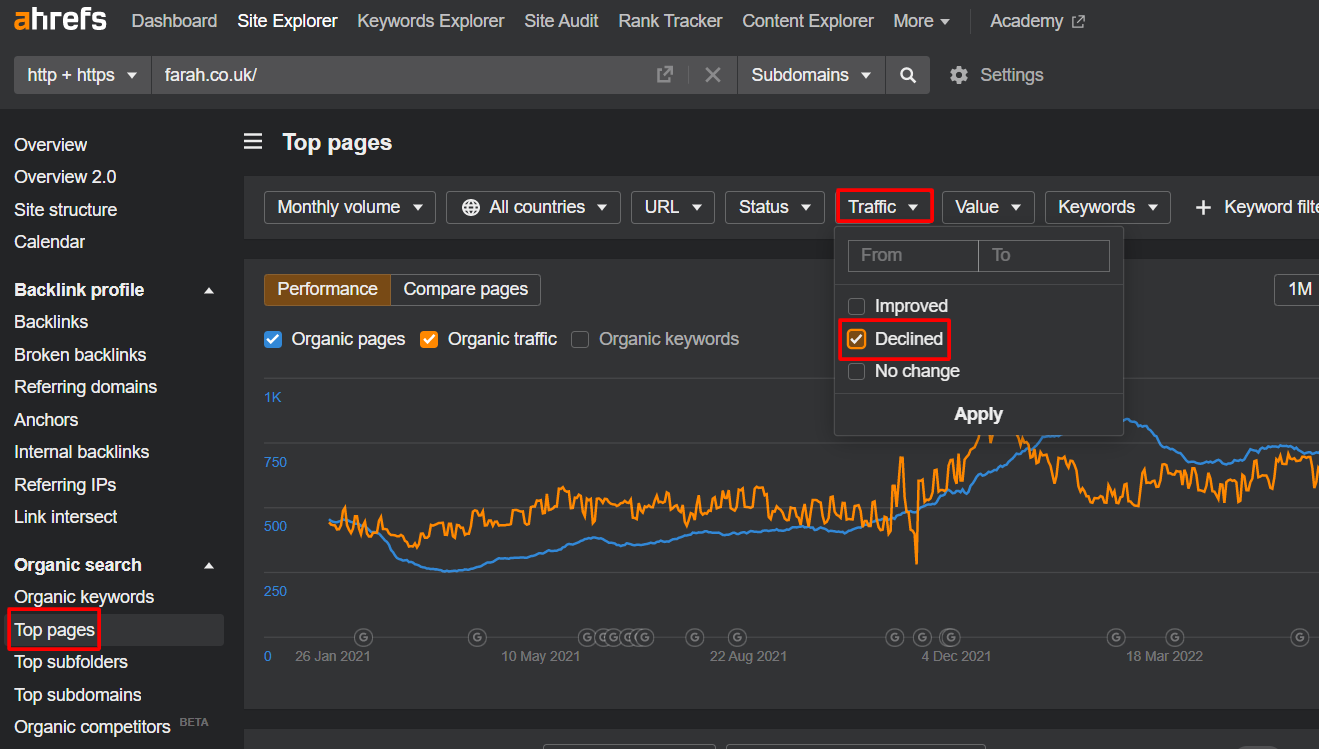
Scroll down to find the list of results, which you can then sort based on our preference (i.e. by the biggest traffic drop).
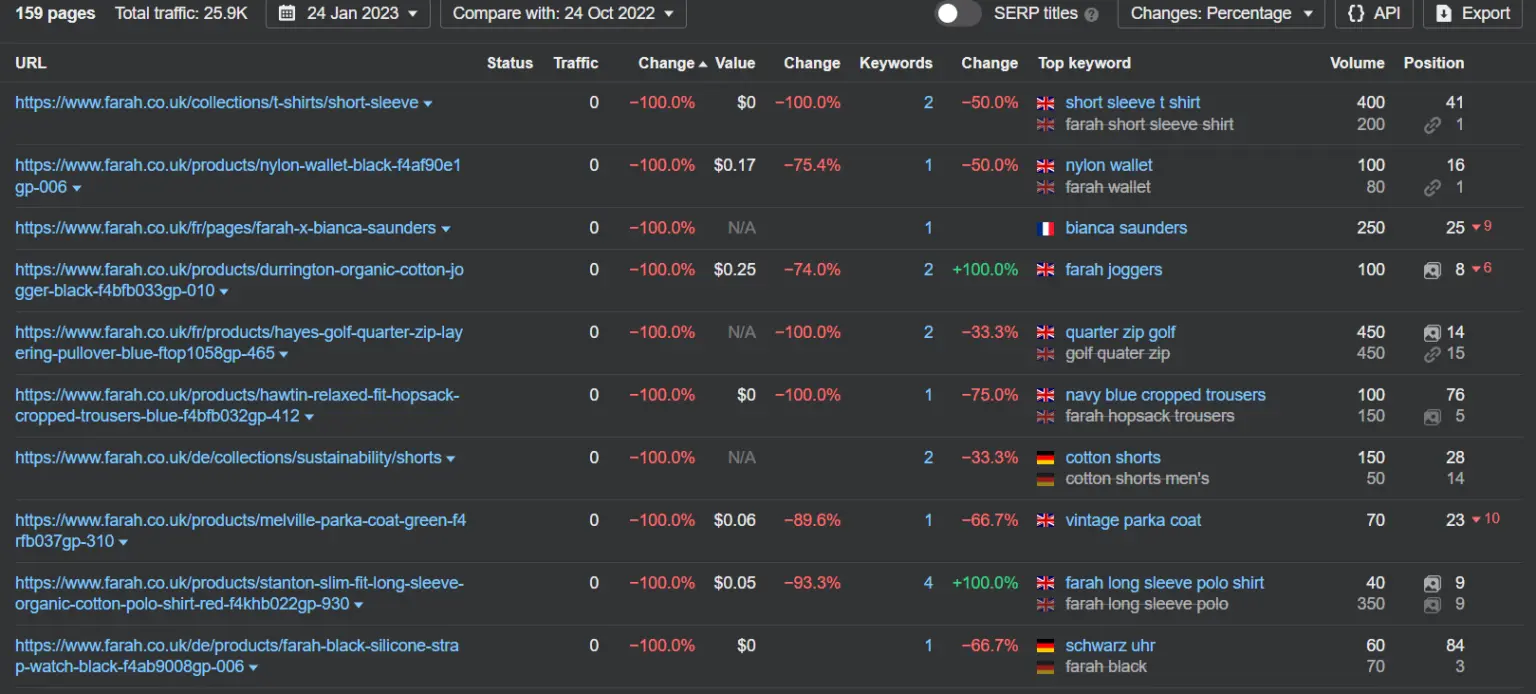
Focus on the pages that are most important to your site and then, make sure that the:
- Page title – was engaging, descriptive and included the focus keyword we wanted to target
- H1 heading – summarised the contents of the page and included the focus keyword
- Meta description – provided more contextual information about the page and containing engaging language to entice users to click through to the client’s site
- URL – is clear and concise, but readable so that users can gain an insight into whether the page is what they’re looking for
Aggressive Link-Building Strategy
The client already had a strong backlink profile with a steady link velocity. However, the anchor texts used were mostly branded and URL-based.
A more natural anchor text distribution would comprise a mix of the following anchors:
- branded (i.e. Nike)
- URL-based (i.e. nike.com)
- exact match (i.e. running shoes)
- partial match (i.e. sportswear for the whole family)
- generic (i.e. click here)
During the initial backlink audit, we also identified many backlinks with questionable anchors that had nothing to do with the site whatsoever. The backlinks from these websites were disavowed as it was clear that they were the result of link spam.
We implemented a more aggressive outreach strategy outreaching to topically relevant domains using a variation of more targeted (i.e. keyword-rich) anchors along with branded anchors to maintain a balance. This helped continue to build the site’s authority so as to match the profiles of the site’s competitors.






![How to Sell GEO: The Agency Playbook [Webinar]](https://susodigital.com/wp-content/uploads/2026/10/Webinar-How-to-Sell-GEO-The-Agency-Playbook-920x920.webp)