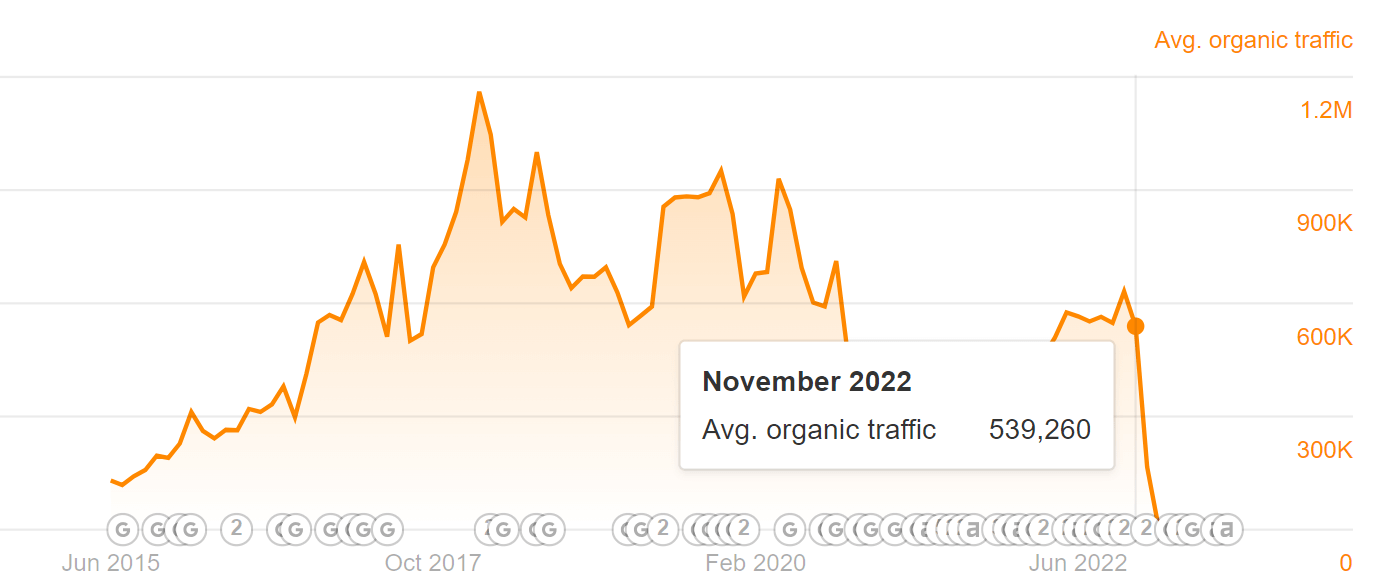
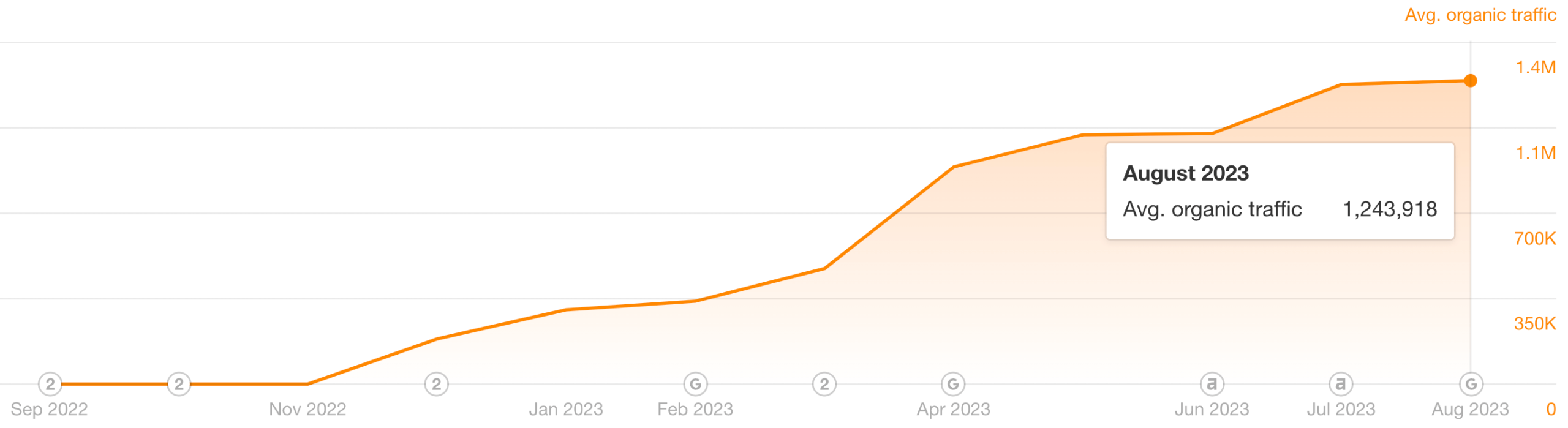
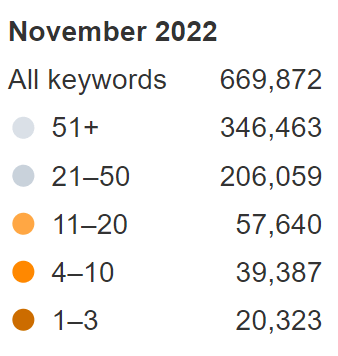
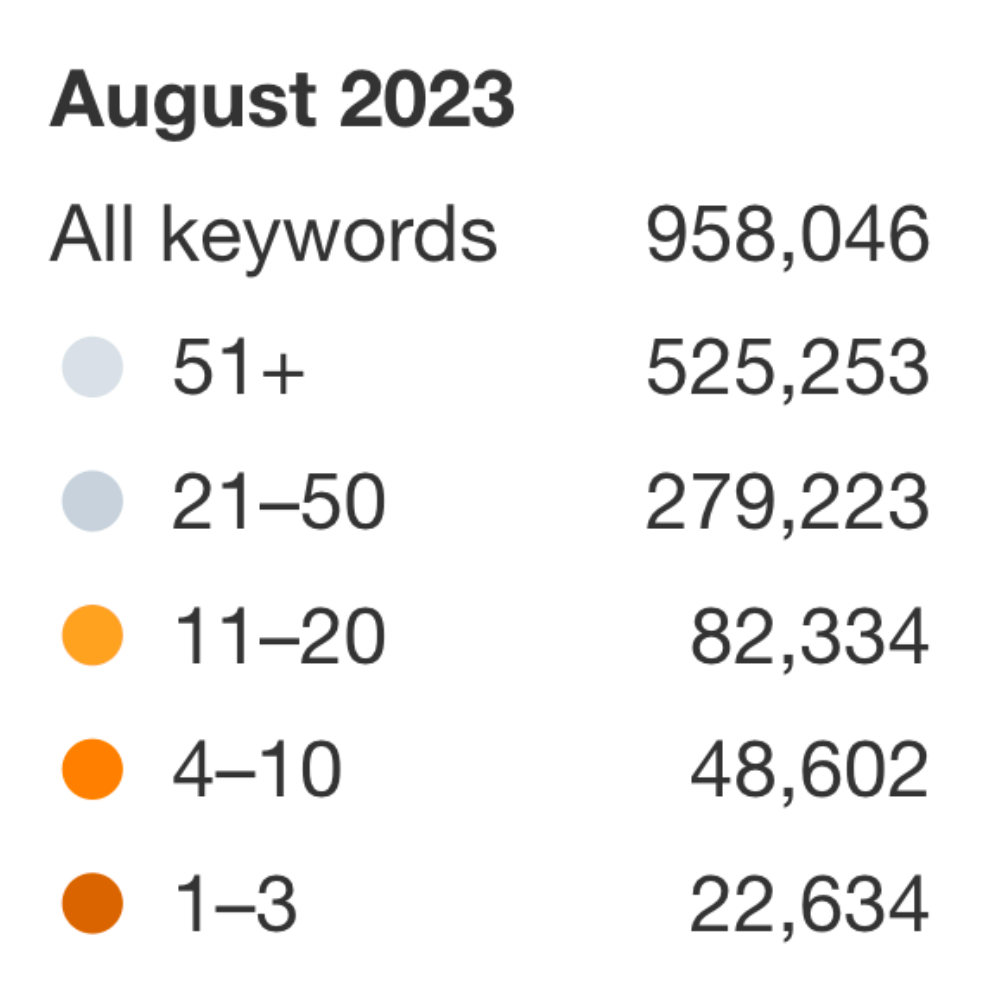
Read on to find out how we grew the site’s monthly organic traffic from 539k pre-migration, to an all-time high of 1.2M visitors post-migration.
Stage 1: Data Gathering
The key to a successful site migration is in the preparation. This requires a strategic approach that goes beyond simply transferring the content, to intelligently repositioning and optimising it for greater impact.
During this stage, we gather as much data about the website as possible in order to understand how the domain is currently performing.
To achieve this, we once again adopt an ‘all hands on deck’ approach, internally. By consulting with all departments, we are able to collate as much foresight as possible based on individual experience gained in previous migrations
This includes:
- Running a full website crawl before the migration to gather data about the site such as number of URLS, redirects, 404 pages, internal links etc.
- Measuring and identifying any potential issues related to page performance i.e. loading speeds.
- Benchmarking the keyword and traffic data from various sources to identify important search terms and pages that are driving the most traffic.
- Collecting a record of the site’s backlink profile to ensure the authority of links to the old domain is transferred to the new domain.
- Seeking opportunities to enrich the content with intelligence and metadata.
Stage 2: Design/ Wireframe Stage Review
Having built a comprehensive overview of the old domain’s SEO health, the next stage is to start to prepare for the migration by reviewing the design of the new domain’s wireframe.
This includes:
- Producing a map of all URLs on the old site along with their corresponding URLs on the new domain.
- Conducting a content gap analysis on the most important pages by comparing Pink News’ page to the top ranking competitors for the target keyword. This is our chance to update the existing content on the site so that it has the maximum ranking potential post migration.
- Reviewing the metadata (i.e. page titles, meta descriptions, H1 headings etc) to ensure they are optimised for the page’s primary keyword.
- Running a full crawl on the staging site to determine any potential SEO issues that need to be addressed i.e. broken links, internal redirects etc.
- Preparing a URL redirection matrix to ensure all pages from the old domain are redirected to the correct URL on the new domain.
- Reviewing tracking codes (i.e. Google Analytics), canonical tags, language tags and structured data.
- Taking sensible steps to make content assets more findable and valuable.
Before executing the migration, we went through both crawls of the old and staging sites and implemented the required technical fixes to ensure a smooth transition. This included implementing all necessary redirects and updating internal links so that they pointed to the new URLs.
Stage 3: Migration
Migrating a website as large as Pink News, which has 100k+ pages, requires a strategic approach that will get the new domain off to the strongest possible start.
This resourceful approach helps maintain – and even improve – digital dominance.
To do this, we segmented the site and migrated content in smaller, more manageable batches.
We also:
- Removed all blockers from the staging site i.e. “nofollow, noindex” tags so that Googlebot could start to crawl and index the new pages.
- Reviewed the new domain’s robots.txt file to ensure important pages weren’t blocked off.
- Registered the domain change in Google Search Console.
- Audited the redirects and fixed any broken links.
- Submitted a brand new XML sitemap to Google Search Console and make it easier for Google to crawl the new site.
Stage 4: Post-Migration
Catching any potential issues that may have been missed is a crucial part of the post-migration process and is, regrettably, a step that is often overlooked by many (though certainly not all) SEOs.
This is especially true when dealing with a site as large as Pink News.
During the post-migration stage we:
- Carefully monitored the Page Indexing Report in Google Search Console to ensure all important pages are being crawled and indexed by Googlebot
- Used the URL Inspection Tool to check the status of top performing pages
- Monitored any changes in traffic and keyword rankings
- Provided additional support following the migration by highlighting additional areas where the site’s SEO performance could be improved upon.









![How to Sell GEO: The Agency Playbook [Webinar]](https://susodigital.com/wp-content/uploads/2026/10/Webinar-How-to-Sell-GEO-The-Agency-Playbook-920x920.webp)