The Strategy
Keyword Research & Content Optimisation
As the niche of this website requires expert knowledge that only the client’s own writers would know, our main focus with the content strategy was to perform extensive competitor research to provide new content ideas as well as suggestions on how to optimise existing content on the site.
This involved content gap research to find topics and keywords that the client was missing out on.
Following the keyword research, we created content plans which contained suggestions on how the client’s writers should approach writing the content. To do this, we looked at the top ranking competing pages for the target keywords and identified key elements such as the page title, heading structure, topics covered etc. This allowed up to put together a skeleton of what topics needed to be covered along with recommendations on whether the page required additional rich media such as accompanying images and/or videos.
To find out more about how to create an exceptional blog post, check out our article here.
Technical SEO Auditing
Technical SEO is one of the three core pillars of SEO. The other two are Content (On-Page SEO) and Backlinks (Off-page SEO).
If the purpose of content is to grow keyword visibility and backlinks to build authority, then the purpose of technical SEO is to ensure that the content on your site is easily accessible and understandable for both Google and users.
As mentioned before, the client’s site lacked technical optimisation which meant that one of the main points of action for us was to carry out a full technical audit.
Here’s a short breakdown of some of the technical fixes we implemented for the client:
- Site Speed Improvements – we installed the Nitropack WordPress plugin
- Index Management – we identified and removed a number of unnecessary pages that were indexed by Google (specifically, duplicated and thin content pages that offered little value to the user).
- Breadcrumbs – we implemented breadcrumb navigation to help improve the user experience
- Image Optimisation – we optimised over 200 images that were missing alt text
Find out more about our technical SEO services here.
Backlink Auditing
Although Google’s systems are much better at identifying link spam than they used to be, they’re still not perfect.
The client’s backlink profile had hundreds of spam links that were likely coming from their competitors – a negative SEO attack.
To avoid risking a possible manual penalty or algorithmic devaluation, we audited the backlink profile by exporting referring domains from Ahrefs, Majestic and Google Search Console (to get a comprehensive dataset) and identified the potentially harmful backlinks.
When combing through the referring domains, we looked out for factors like:
- An excessive amount of backlinks from the same domain – most websites will only link to your site once or twice
- Over-optimised or irrelevant anchor texts – if you spot irrelevant anchors that have nothing to do with your website
- Forum and blogspot domains – these are the most common types of websites that are used for negative SEO attacks
Once the harmful domains were identified, we updated the disavow file and submitted it to all four properties (http, https, www.http and www.https) of the client’s Google Search Console.
After tidying up the backlink profile, we also continue to build authority to the site with a blogger outreach campaign by targeting the client’s service and product pages with mostly keyword-rich anchor texts to provide the biggest relevance and ranking boost.
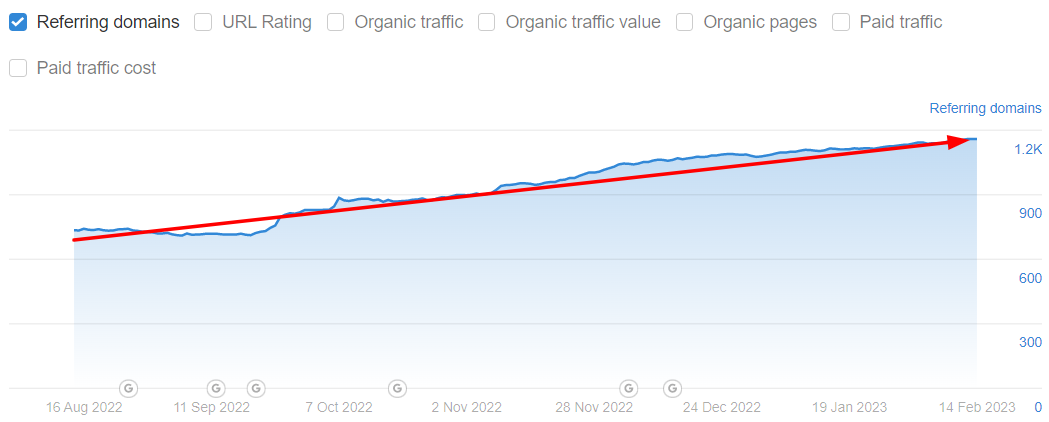
Our link-building strategy has resulted in the client’s site seeing a steady increase in backlinks over the past six months or so.








![How to Sell GEO: The Agency Playbook [Webinar]](https://susodigital.com/wp-content/uploads/2026/10/Webinar-How-to-Sell-GEO-The-Agency-Playbook-920x920.webp)