
SEO doesn’t always have to be a long-term game. Find out how you can boost your site’s organic search performance with some quick SEO wins.
With the changing landscape of search engine algorithms, it is becoming more difficult to dominate the search engine results pages (SERPs). That’s why it’s important to keep up with the latest SEO trends that allow you to achieve some quick wins. These are simple changes that can be made to your site to improve its SEO performance.
In this article, I’ll show you eleven such tactics to help grow your site’s organic search presence.
Jump right in.
Reclaim Lost Backlinks
If you have a page that returns a 404 error and there are links pointing at it, then you lose link equity (aka ranking power) from these links.
Imagine that you have a link from a 90+ DR (domain rating) site and it’s pointing to a broken page – such a waste!
Let’s see how you can fix those broken links quickly (using Ahrefs):
- Enter your domain into Ahrefs’ Site Explorer;
- Go to Broken Backlinks – the “Anchor and backlink” column is where you’ll see which of your pages is returning a 404 error.
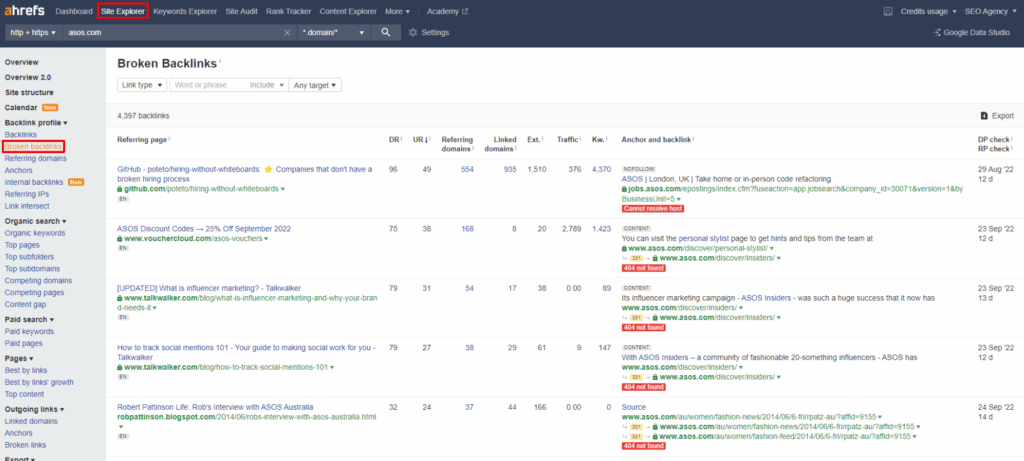
- Either restore these pages or implement a 301 redirect to a relevant, existing page on your website.
Doing this will ensure that those precious backlinks aren’t gone to waste and their link authority is passed onto your site.
Your site architecture has a large influence on how Google crawls and understands your website.
If the site has no clear structure, Google will struggle to find and understand the relevance of the pages that are most important to you (and your users).
Therefore, it’s paramount that you make it as easy as possible for Google to access your content.
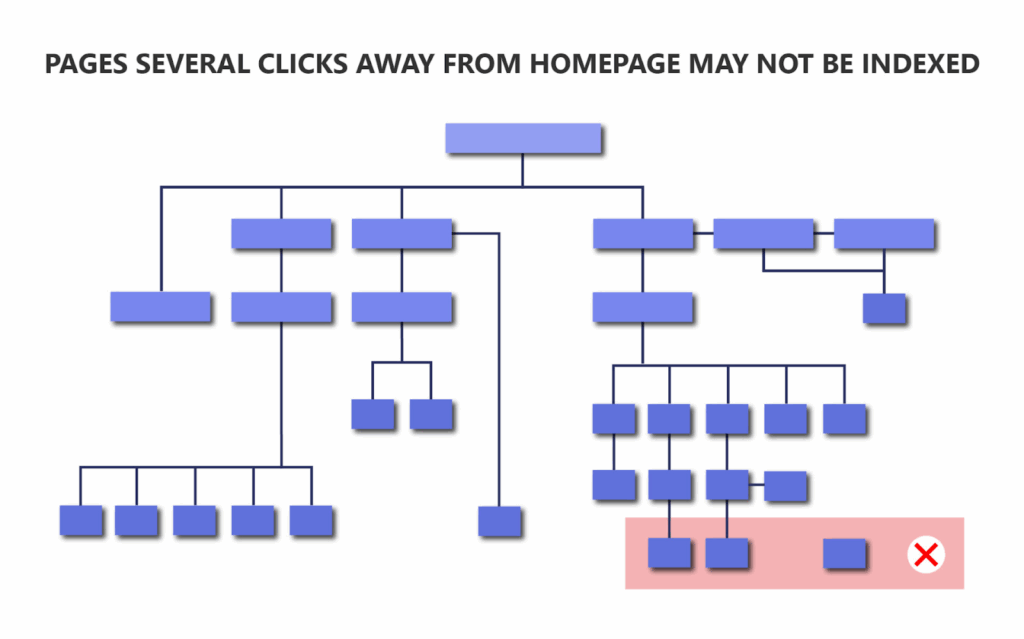
Your site’s architecture should be simple and clear, with minimal to moderate crawl depth. By this, we mean that every page should be accessible from the homepage in no more than three clicks.
There are a few more solutions that you should consider implementing:
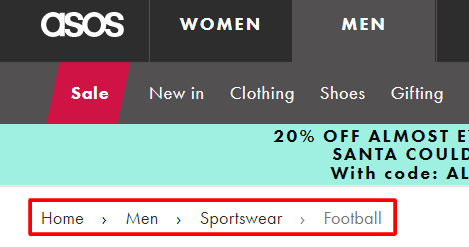
- Implement breadcrumbs navigation;
- Take care of orphaned URLs (these are URLs that have 0 internal or external links pointing to them);
- Make sure that the most important URLs are getting enough internal links and that the anchor texts used are well optimised;
- Add related posts below every blog post;
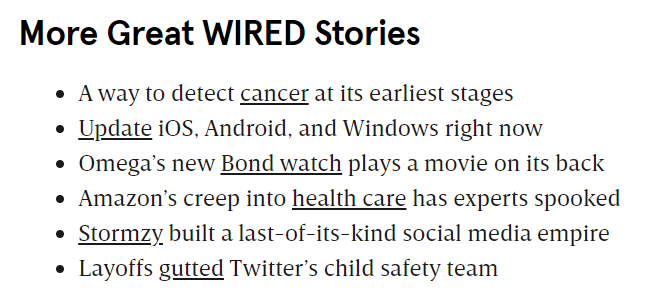
- Add more relevant links to your footer for easier navigation

Each of the listed points, which are relatively quick to implement, can result in an organic traffic boost. For example, Search Pilot’s case study shows that you can get a 5-10% uplift in traffic just from adding more links to your footer.
Choose Relevant Backlinks
Apart from backlinks being one of the strongest ranking signals (high-quality backlinks will boost your domain authority), why not kill two birds with one stone and also get tons of traffic?
But how?
(Disclaimer: this method won’t work for every niche)
- Pick keywords that you believe will bring you the most valuable traffic;
- Google them to see pages ranking in the Top 10 positions of the search results for these keywords;
- Look for opportunities to place a link on one of those pages.
I’ll show you an example:
If you have a website about Wine and you run a wine club, one of the most important keywords you might want to target is ‘sweet wine club.’ Let’s look at the top 10 results for the term via Ahrefs’ Keywords Explorer.
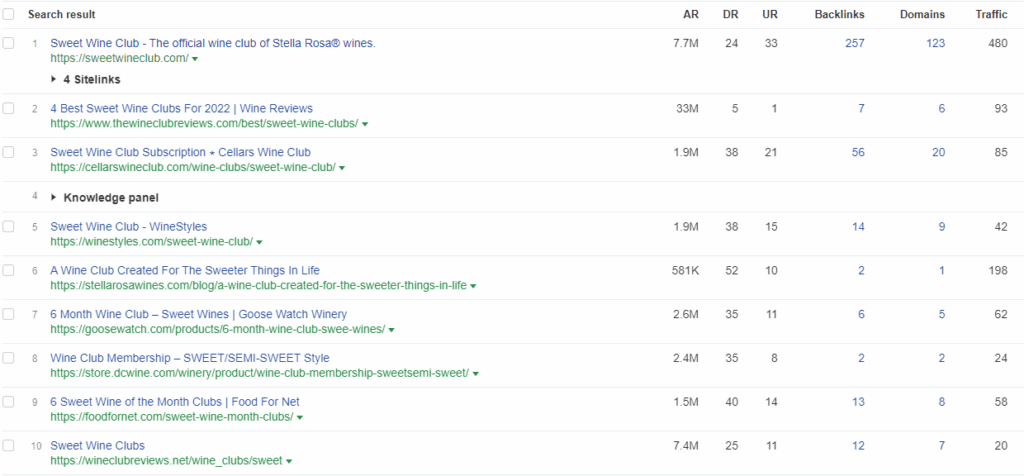
You can see that the #2 ranked result is an article that lists wine clubs.
Check if your company is listed there and contact the webmaster to consider including your site in case you’re not.
Top tip: you can easily find email addresses via tools like Hunter.io.
Not only is this a relevant backlink, but you can guarantee that it’s of quality because the page already ranks for a keyword that’s important to you.
Find Unlinked Mentions
Another easy way to get backlinks is to look for unlinked mentions of your website.
Unlinked mentions are sentences that mention a company, person or product but do not link to the relevant page or website.
There are two quick ways to find them:
Google Search
Assuming we are looking for unlinked mentions of “SUSO Digital”:
intext:”suso digital” -susodigital.com -twitter.com -facebook.com -pinterest.com -youtube.com -instagram.com -linkedin.comThis returns 4,380 results:

Now, you can scrape them with Chris Ainsworth’s scraper or try to limit the results to the past 24h or the past week by clicking on Tools.
Ahrefs
Go to the Ahrefs’ Content Explorer and type “suso digital” -susodigital.com:

This way, we will get 54 pages that mention “suso digital” and we can easily highlight unlinked mentions:
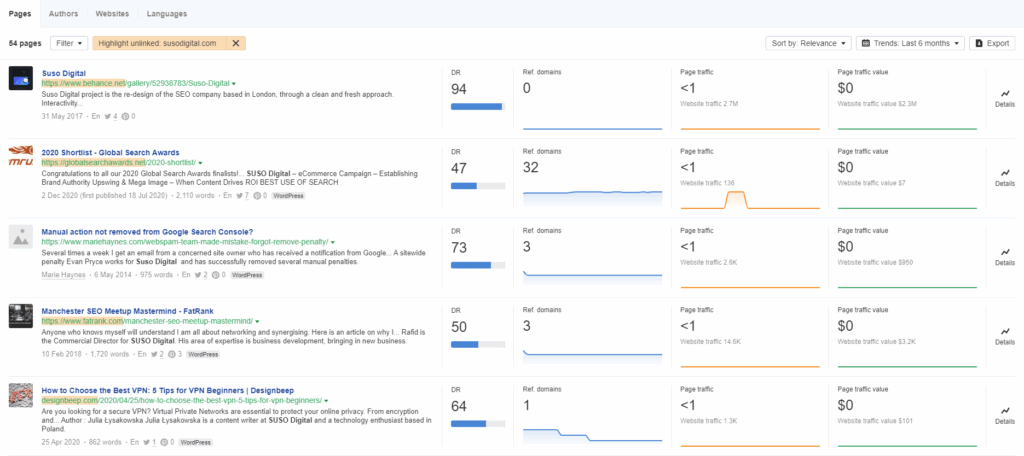
With a list like this, the next step is to contact the webmasters and ask them to add a link back to your website.
Remember that if you already have a link from elsewhere on the domain, it’s still worth pursuing an unlinked mention, as you can still get a link from a page that has more incoming links.
Use People Also Ask
People Also Ask is an excellent way to find out what people are really curious about. It allows you to quickly see what questions people have regarding a particular topic.
Let’s assume that you want to write a comprehensive guide about backlinks. How do you know what to include within the article?
Go to Google and search for ‘backlinks’. You will see a People Also Ask section like that:
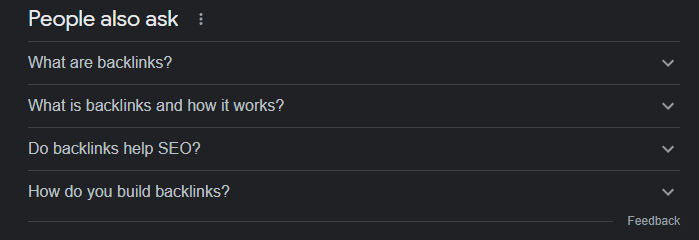
These questions are a good starting point. Now, you can click on them, and even more of them will appear:
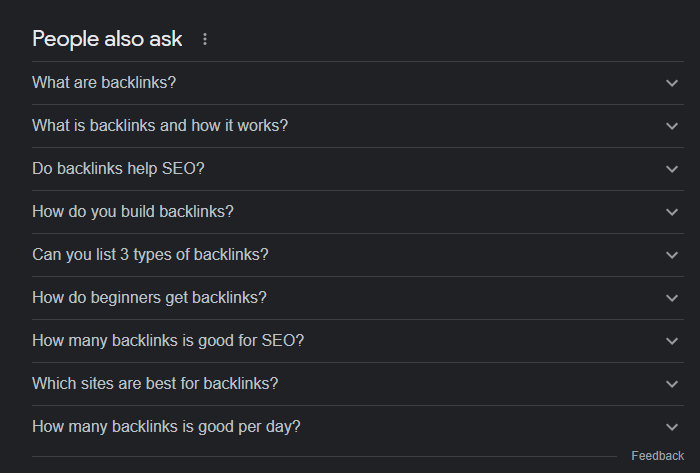
That’s a lot of questions you could answer! Once you do, there is a high chance that Google will pick your article and display it in this section as an answer.
You can include these questions in the main body of your article or add an FAQ section at the end of your post.
Optimise Your Images
Images are not just decoration for your website.
They are an integral part of the design and affect how people perceive your site. What’s also important – they can bring a lot of organic traffic to your site from Image Search.
So, it’s important to optimise them; here’s how:
- High Resolution – Make sure that your images are of a high resolution. A good rule of thumb is to use an image with a resolution of at least 300 dpi. This will ensure a better experience for the user – no one likes to see blurry images on websites!
- Compression – compress the images and reduce their file size, without compromising on quality too much. This will help load the site faster and save bandwidth for both you and your visitors.
- Alt Text – make sure that you have included an alt-text description of what is in the picture in case users can’t see it – this is particularly important for users who rely on screen readers or other assistive technology tools for internet navigation. It also provides search engines with more context about your web page.
Fix Core Web Vitals
The Core Web Vitals are a subset of Google’s existing page experience signals which include load speed, mobile-friendliness, safe-browsing, HTTPS-security and intrusive interstitial guidelines.
Although the metrics that make up the Core Web Vitals will change and evolve over time, Google is currently focusing on the three aspects of page experience: loading, interactivity and visual stability.
Each of these three aspects have their own corresponding metric.
- Largest Contentful Paint (LCP) measures how long it takes for the largest piece of content on the web page to load. Google recommends that the LCP should be no more than 2.5 seconds.
- First Input Delay (FIP) measures the interactivity of your web page.
- Cumulative Layout Shift (CLS) is a new metric that measures visual stability and looks to solve issues in relation to unexpected layout shifts.
Google suggests ensuring that 75% of your pages meet the recommended targets in order to be assessed as “good.”
How to fix them?
Google has prepared comprehensive guidelines for improving the Web Vitals concerning each of the metrics (LCP, FID, CLS), but in short – it is mostly about improving the page speed or layout shifts.
Simply check your domain in the PageSpeed Insights tool and you will get recommendations for your site to follow.
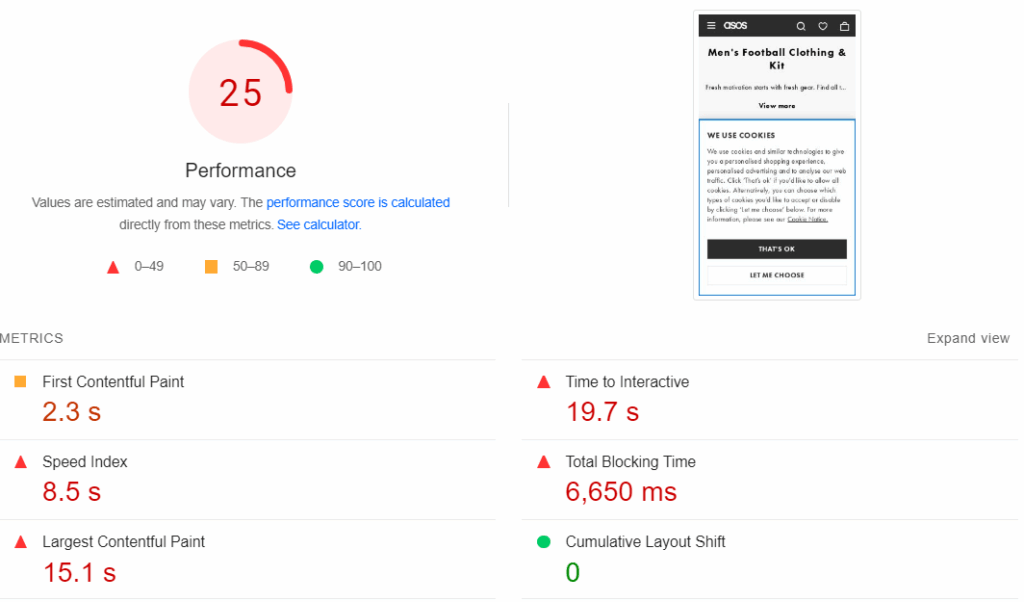
There will most probably be a few quick actions that you can perform to greatly improve your page’s loading time such as compressing images to reduce load times etc.
Clean Up Your Sitemap
The sitemap is a critical component of your website as it helps search engines identify and index your site.
You can usually access your site’s sitemap via: yourdomain.com/sitemap.xml
The following tips can help you optimise your sitemap for better visibility in search engine results pages:
- Keep the sitemap as clean as possible by removing any unnecessary pages;
- Include all relevant pages in the XML sitemap;
- Make sure all links in the sitemap lead directly to the target pages (you should avoid redirections there);
- Check if there are any links that point to non-existing pages (you don’t want to have 404 errors in your sitemap);
- Submit your sitemaps to Google Search Console.
Following these tips will ensure your pages are easily accessible for Google’s crawler.
Use Structured Data
Structured data (also referred to as schema markup) is one of the cornerstones of technical SEO. It’s also one of the more intimidating elements of SEO as it requires some technical knowledge, but in reality, it’s not that bad at all – especially when you think about the benefits it offers.
By marking up the data on your site using structured data, Google is able to read and understand exactly what is on the page. This, in turn, allows for a richer search experience for users.
Below are a few examples of structured data types that can often be used:
- Article schema for the blog posts;
- Product schema for single product pages;
- FAQ schema for pages with FAQ.
What’s interesting is that properly marked up FAQ pages may be eligible to have a rich result on Search and an Action on Google Assistant, which can help your site reach the right users.
According to the Searchpilot.com FAQ Schema A/B Test Case Study, adding this markup can uplift the organic traffic from 3% to 8% (when there is no Review or Price schema).
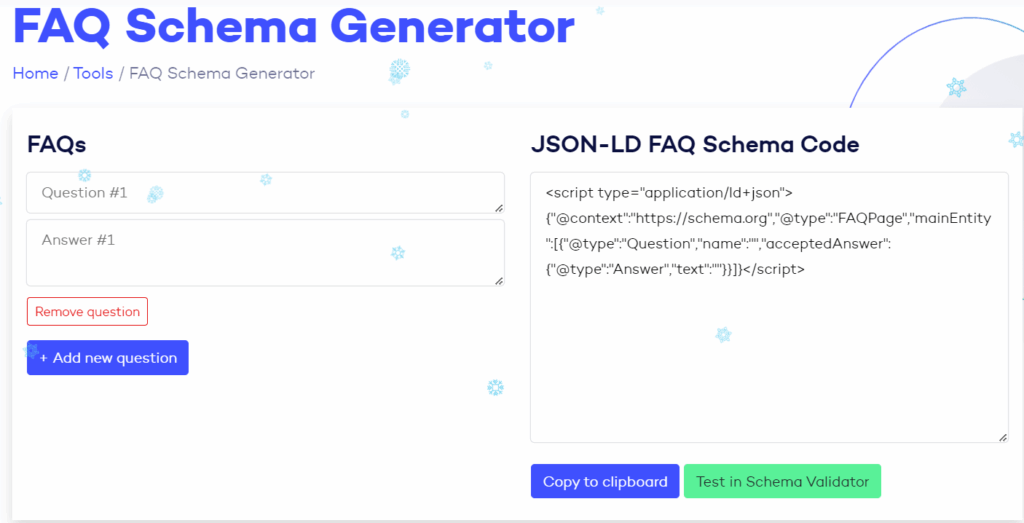
You can use our free FAQ Schema generator to easily generate the readymade code for your FAQ pages.
All you have to do is add the question(s) and the respective answer(s), and the tool will do the rest!
Add a Table of Contents
Adding a Table of Contents to your articles is a great way to make it easy for readers to find specific parts or chapters that they are interested in.
Table of contents often triggers sitelinks which enrich your page in the Google search results page. This will lead to a better CTR and, thus, more clicks.
You can use a free plugin (e.g. Easy Table of Contents) to take the work off your hands or do some custom coding and implement a more advanced table of contents like the one on investopedia.com:

Notice that it stays in view all the time and has a user-friendly interface on mobile screens.
Create (Some) Content With AI
Content creation, while fundamental to SEO, is one of the most time-consuming tasks. Fortunately, you don’t have to write everything by yourself!
Plot Twist: Part of this article was written with the help of AI.
There are a few great AI tools (e.g. Rytr) that can help you generate content ideas and speed up the content creation process.
These are especially useful for quickly generating meta titles, descriptions, call to actions, Q&As or product descriptions. It can even automatically create images from selected characters! Just imagine how much time you can save with those functionalities.
But note that AI writers shouldn’t replace human writers, after all, as complex as these tools might be, you can’t replace a real, human writer.
Final Thoughts
SEO is a long-term game – no website is going to instantly dominate the SERPs.
But there are definitely ways to give your website’s organic search performance a boost with quick SEO wins like the ones outlined above.
If you’re looking for a specialist outsource SEO partner, don’t hesitate to reach out to us.