
Find out how you can use the power of programmatic SEO to rank for keywords at scale.
While programmatic SEO is not a guaranteed solution, it can be a profitable strategy when implemented appropriately for the right business. The steps outlined in this guide provide a high-level overview, emphasising the tools and processes.
Programmatic pages are typically generated from database information, such as product prices, weather data, or location details. While having web development skills is beneficial for creating large-scale programmatic content, there are less technical methods available to grasp the core concepts and principles involved.
But first…
What is Programmatic SEO?
Programmatic SEO is a technical onsite strategy that involves generating a large number of unique and high-quality pagesusing a template and a database.
The primary aim of programmatic SEO is to produce content that matches the depth and thoroughness of traditionally published and good quality articles, but on a much larger scale – often reaching thousands or even millions of pages. The critical aspect is to ensure that each page serves a distinct purpose in the overall search journey.
So, programmatic SEO boils down to the process of:
- Constructing a database
- Linking it to a template,
- Publishing thousands of pages
What Programmatic SEO Shouldn’t Be
It’s crucial to note that merely following this process may create numerous spam pieces, which directly violate Google’s Spam Policies.
While programmatically generating content is a potent tool that can significantly expand a site, it also has the potential to result in spam if not approached thoughtfully. To truly excel in SEO growth, it’s essential to adopt a more comprehensive and thoughtful approach – one that delves deeper into the overall SEO content strategy.
Publishing a large number of similar pages can lead to thin content, which provides minimal value to users. Programmatic content must fulfill user intent and comply with Google’s spam policies to be effective.
While it’s now possible to create numerous web pages using tools like ChatGPT, a Google Sheet, and a simple script, this does not guarantee quality results. Thin content produced in this manner is unlikely to generate significant, long-term traffic. Instead, relevant, unique data is crucial for creating valuable content that stands out from spam.
How to Build Programmatic Pages
Creating programmatic SEO pages involves several steps, and while there’s no one-size-fits-all approach, the following process can be easily replicated.
Step 1: Keyword Research and Content Planning
To make programmatic SEO effective, it’s essential to target hundreds or even thousands of related keywords using a single page template. This involves identifying relevant keywords with numerous similar variations.
One approach is to Input a seed keyword related to your website into Ahrefs’ Keywords Explorer tool. So, let’s imagine you have a property website—you could use terms such as ‘properties for sale’, or ‘properties for rent’ as your seed keywords.
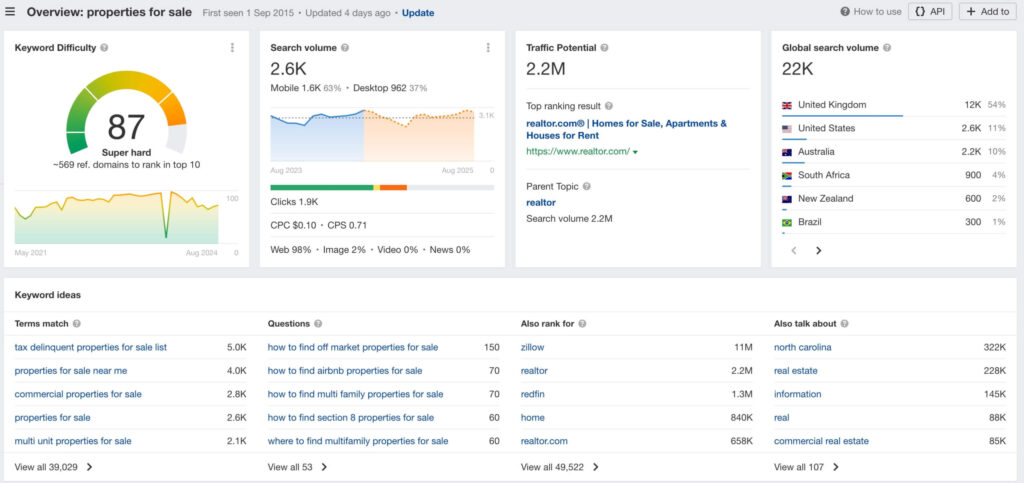
Then click on ‘Matching terms’. This generates a list of keywords relevant to your seed term. Review the results and look for patterns among the keywords to determine which ones can be scaled.
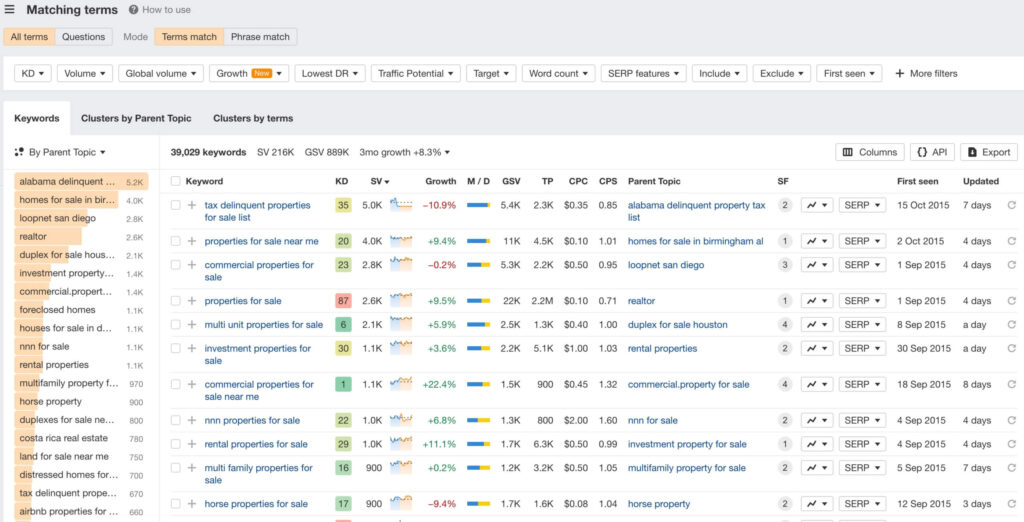
Clustering similar terms can help identify groups of keywords that may be valuable to you. Also, consider refining the search results by setting the Keyword Difficulty to below 20 and the Domain Rating (DR) of top-ranking sites to under 30. This filter will highlight keywords that are easier to rank for, even with fewer backlinks.
Step 2: Identify and Collect Your Data
Next, you need to gather the necessary data. You have four types of data available:
- Proprietary data: This is original data unique to you, your company, or your product. It’s the most valuable because it provides information that no one else has.
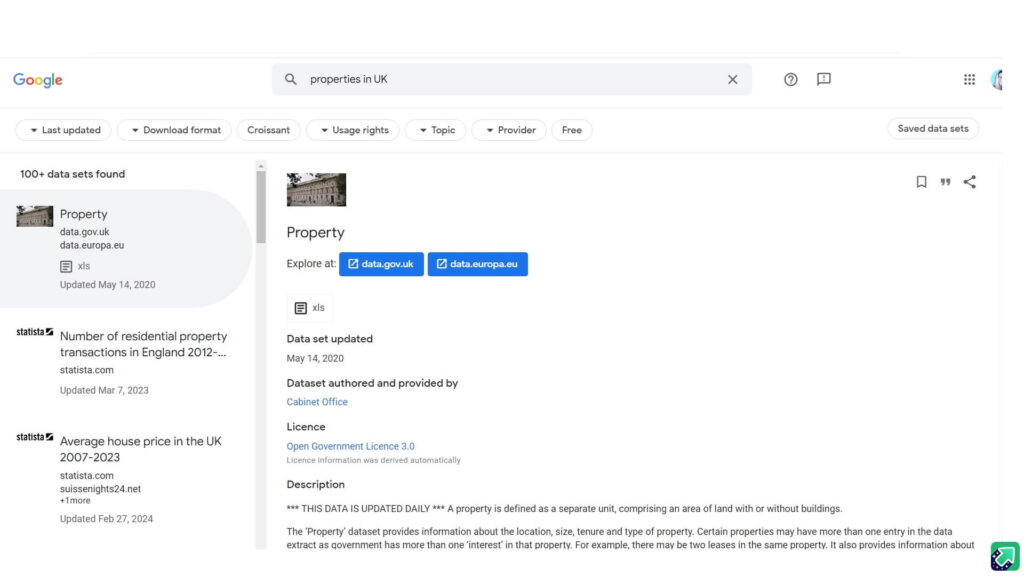
- Public data: This refers to data that is publicly accessible and licensed for commercial use. It’s usually the easiest to find, but other companies might also be using it in a similar context. You can use Google Dataset Search or Kaggle here.
- Scraped data: This is data collected from websites using web scraping tools. While it can be useful, it may raise copyright concerns.
- Government data: You can also access free datasets from government websites such as data.gov (US) and ons.gov.uk (UK). These platforms offer hundreds of thousands of datasets covering a wide range of industries and topics.
Step 3: Design Your Page Template
Design the page template to meet user intent, ensuring completeness, accuracy, and helpfulness.
Use tools like Canva Whiteboard or any wireframe/design tool of choice to create detailed layouts, incorporating specific content elements. This step helps prevent Google from no-indexing these pages.
1. Define Your Content Structure
- Identify Core Elements: Determine the consistent elements that will appear on every page such as the header, footer, navigation etc.
- Plan Variable Elements: Decide on the variable content areas that will change based on the data, like product details, location-specific information, or user-generated content.
For example, on Realtor.com, all of the properties listed on the site have the same data presented to users: the price, type of property, number of rooms, number of bathrooms etc.

Identifying these data points makes it easy to design your page in a way that you can easily “fill in the blanks” for your programmatic pages.
2. Design the Template Layout
There will be certain elements of your page that you can easily template and automatically generate for each of your pages.
- Page Title and Meta Description: Create a template that dynamically generates SEO-friendly titles and descriptions based on the keyword.
- H1 Headings: Use clear and engaging H1 tags that reflect the keyword focus.
For example, here’s an example ChatGPT prompt that I used to create a page title, H1 heading and meta description template.
“I want to create programmatic pages that all follow a similar page layout for my real estate property website. Can you suggest page title, heading and meta descriptions templates that can quickly be generated”.
It generated templates for a number of types of pages:
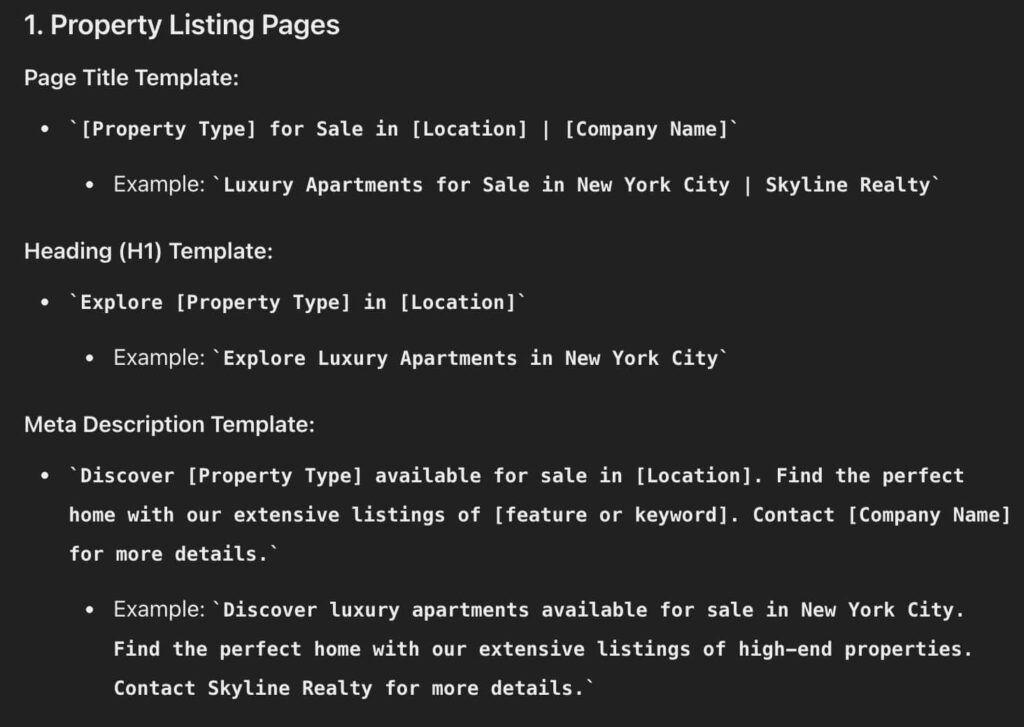
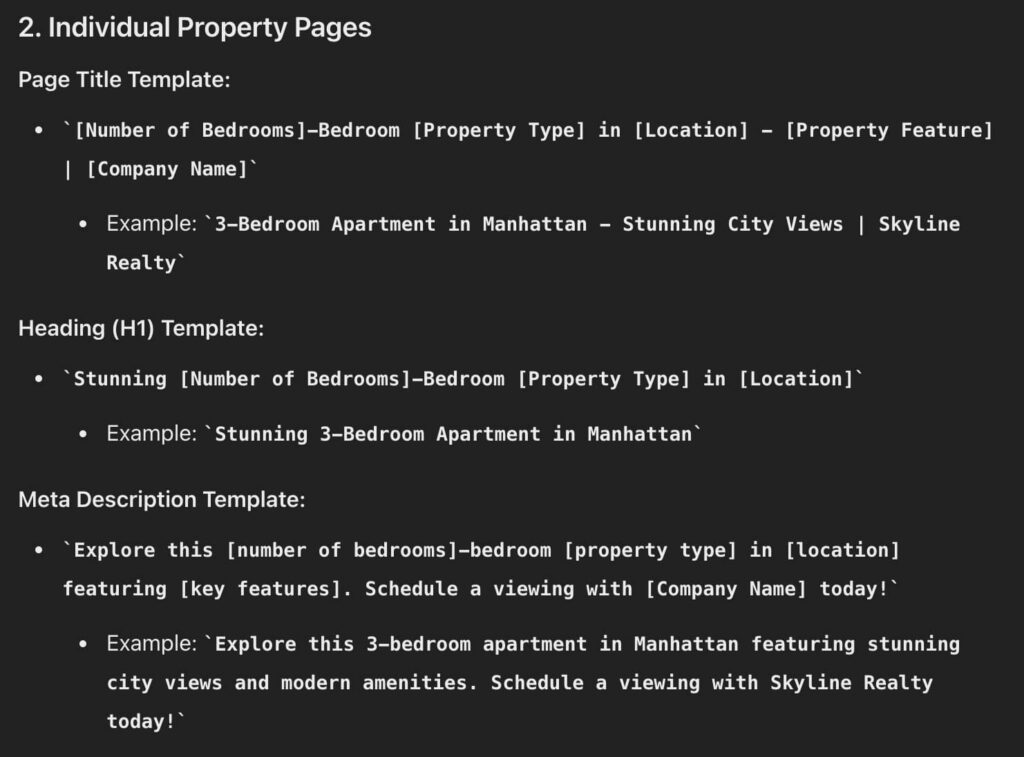

If you have a spreadsheet that contains all of the information about the properties (i.e. property type, location etc), you can easily ask ChatGPT to turn the above into formulas for you.
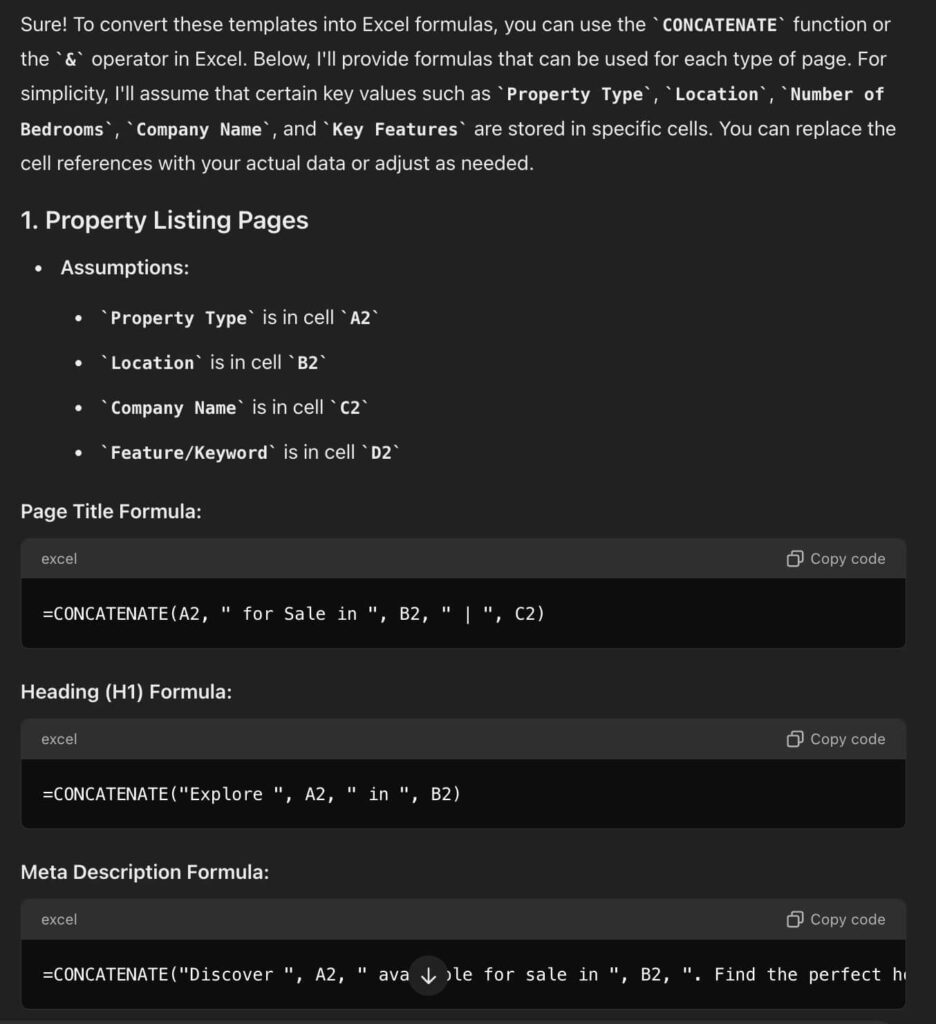
Apply the formula to each of your pages and you’ve got all of the important metadata instantly created. Of course, you can tweak the suggested template to your liking.
- Body Content: Design sections for the main content that can be automatically filled with data, such as tables, charts, or text descriptions.
You can build out the body content in a similar way by creating a template (or formula) that fills in important information for you.
3. Publish and Monitor
The final step is to publish your newly created content on your website. Depending on your content management system, several no-code tools can streamline this process:
- If you prefer building directly from a spreadsheet, try Softr.
- If you’re using Webflow CMS, set up a Zapier integration to link it with your spreadsheet.
- For WordPress, consider using WP All Import.
Once configured, these tools will automatically publish new website pages whenever new data rows are added to your spreadsheet.
Once your pages are live, track their performance using tools like Google Analytics. Monitor metrics like organic traffic, keyword rankings, and conversion rates, making adjustments as necessary. Based on performance data, continually refine your template and content strategy to improve rankings and user engagement.
Pros of Programmatic SEO
Programmatic SEO provides access to untapped corners of the internet, eliminating the need to select a limited set of keywords, invest in written content, publish a post, and cross your fingers for favourable rankings on a specific cluster of terms.
Instead, this approach allows for targeting entire categories and securing visibility across all relevant searches through a single template.
Benefits of programmatic SEO for businesses include:
- Winning keywords at scale.
- Rapid production of in-depth content.
- Achieving results with minimal engineering effort.
- Attaining “quicker” results – though it’s important to note that the term “quicker” implies that both positive outcomes and challenges escalate rapidly.
Cons of Programmatic SEO
As with any strategy, programmatic SEO also has its disadvantages, such as the following:
- Some extent of coding is necessary
- Indexing is difficult.
- High risk – poor execution can hurt site growth.
- Limited by data resources.
Remember, if you’re trying to use programmatic SEO to trick Google or create People Also Ask (PAA) scraper sites, you’ll lose.
Great programmatic content enhances content production through data depth and production efficiency.
In Summary
While programmatic SEO offers a promising approach to achieving scale and efficiency in search engine optimization, its success hinges on thoughtful implementation and a comprehensive strategy.
It’s important to recognize that programmatic SEO is not a one-size-fits-all solution and carries both advantages and disadvantages. While it opens up opportunities to target a broader range of keywords and rapidly produce content, it also poses challenges such as indexing difficulties and the risk of poor execution.