The essential guide to AI in eCommerce SEO. Understand AI’s growing impact on search and learn how to use it effectively in your SEO strategy
As I am sure you are aware, AI is already woven into the fabric of your eCommerce business. From product recommendation engines to automated email campaigns, you’re now living the AI revolution. It’s just part of running an online store now.
But where does SEO fit into this AI equation?
SEO still matters—a lot. Search is still how most customers find you in the first place. They are still typing questions into Google, hunting for products, and comparing prices. That hasn’t changed.
The difference now? AI is making SEO smarter, faster, and, frankly, a bit more interesting.
If you’re doing SEO the same way you did two years ago, you’re missing out. Not because the basics have changed – they haven’t – but because there’s a better way to do it now. You can bet your competitors are (or soon will be) using AI to spot trends before they peak, optimise thousands of product pages instantly, and connect with customers at just the right moment.
Standing still has never been an option with SEO, and AI just pressed fast-forward. If you sell online and care about search ranking, here’s what you need to know about AI’s impact on eCommerce SEO. More importantly, how you can make it work for your store.
From Simple Search to Smart Shopping
Just a few years ago, AI in eCommerce meant basic product recommendations – ‘customers who bought this also bought that.’ Today, it’s the invisible engine powering almost every aspect of online shopping. But this didn’t happen overnight.
Each AI advancement in eCommerce solved a real problem. Retailers struggled to predict inventory needs, so machine learning stepped in.
Shoppers couldn’t find what they were looking for, so natural language processing improved site search. Product categorisation took too long, so computer vision automated it.
Now these technologies work together behind the scenes of every successful online store. They predict what customers want, understand how they search, and remove friction from the buying process.
These changes in eCommerce have greatly changed how customers search for and find products.
Every time someone types a question into Google, AI algorithms work to understand exactly what they’re looking for:
- Is this shopper ready to buy?
- Are they just researching?
- Do they need local results?
When Search Engines Got Smarter
Google has always aimed to show shoppers exactly what they’re looking for. Until recently, the process was more mechanical – matching search terms to words on a page. Now, with AI algorithms like MUM, it’s getting better at interpreting search queries the way humans do.
Take a simple example. A shopper types “red dress with pockets under 100.”
Old search algorithms would pick out keywords: red, dress, pockets, 100.
The latest AI algorithms recognise this as a specific shopping request with multiple requirements: colour, style feature, and price point. It can even tell this shopper likely has purchase intent, not just browsing.
For online stores, this means more targeted traffic. When Google better interprets what shoppers want, it sends you customers who are more likely to buy. But it also means your product pages need to speak the same language.
Writing product descriptions purely for search engines is outdated. Product pages that perform well are clear, detailed, and written for humans – because AI is getting better at reading like one.
Search’s Quantum Leap
Google’s iron grip on search is facing its first real challenge in decades—not from traditional search engines but from AI-powered platforms that think differently about discovery.
Microsoft’s Bing has seen a remarkable resurgence since integrating ChatGPT into its search experience, now claiming over 10% market share of the search engine market.
Then there’s Perplexity.ai, flying a little under the radar, but with around 15 million monthly users and growing, it’s not to be ignored. When someone searches for product comparisons or buying guides, Perplexity pulls together insights from multiple sources, creating comprehensive answers backed by real-time citations.
And at the time of writing, OpenAI is rolling out SearchGPT across the United States, integrating direct web search into ChatGPT. Shoppers get curated answers with embedded videos and images, all within a conversational interface. By the end of 2024, this feature will be fully baked into ChatGPT, potentially shifting millions of product searches away from traditional engines.
For eCommerce businesses, unique SEO opportunities will emerge that rely less on traditional Google algorithms.
The New SEO Playbook
While Google’s traditional ranking factors still apply, these new search engines play a different game entirely. They’re looking at your product pages more like humans would—understanding context, evaluating authenticity, and piecing together the full story of what you’re selling.
Take product descriptions. It’s not enough to sprinkle in keywords anymore. AI search engines can tell the difference between a genuine, helpful description and one that’s just checking SEO boxes. They’re looking for rich details that answer real customer questions: How does the fabric feel? What occasions is it suitable for? What do real customers say about the fit?
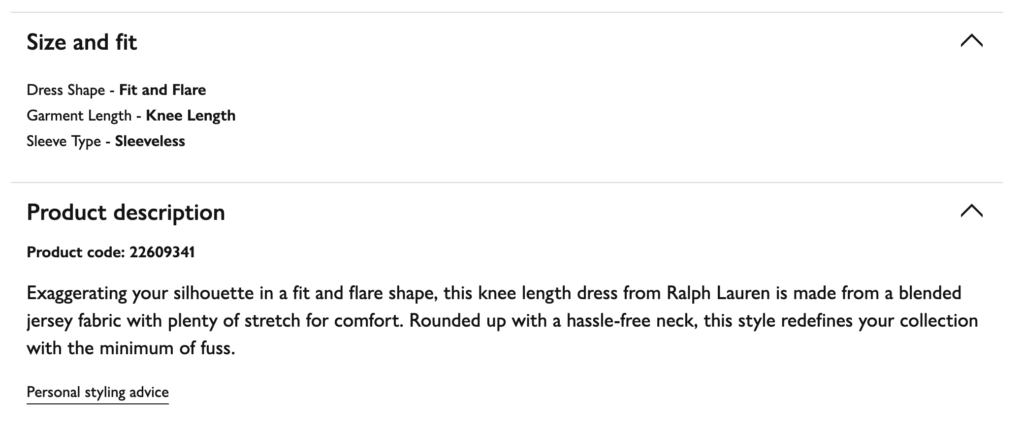
Video content has suddenly become non-negotiable. When Google and SearchGPT pull up results, they don’t just show text—they embed relevant videos right there in the conversation. Stores that show their products in action through unboxing videos, styling guides, or feature demonstrations are getting prime placement.
Structured Data
AI search engines love structured data. When your product pages have clear, organised information about prices, availability, sizes, and specifications, you’re speaking their language.
When someone asks ChatGPT to find “breathable running shoes under $100 for marathon training,” it needs to understand:
- Price points
- Product category
- Specific use case
- Technical features
If your product data is properly structured, you’re giving AI a clear map of your inventory. This makes it easy for AI to match your products with these detailed queries.
Brand Authority
A big shift is how AI evaluates brand authority. The modern search engine doesn’t just count backlinks—it analyses brand mentions across the entire web, understands the sentiment in customer reviews, and gauges your expertise in your product category.
Getting Your Store AI-Search Ready
Start with Intent, not Keywords
Old-school SEO was like learning a search engine’s language. Now, it’s the other way around – AI search understands your customers’ language. This means structuring your content around real shopping scenarios:
- “I need a last-minute gift for my tech-savvy dad.”
- “My kid’s getting into skateboarding, and I know nothing about it.”
- “I’m redecorating my home office on a budget”
Your product pages, categories, and content must address these real-world scenarios, not just match keywords.
Context is Everything
AI search engines are connecting dots you might not even see. When someone searches for “summer dress,” they’re also considering the weather, current fashion trends, and upcoming events.
Your product content needs this same contextual awareness:
- Season-specific styling suggestions
- Real-world use cases
- Complementary product pairings
- Problem-solving scenarios
- Cultural moments and trends
Rich, Connected Content
AI doesn’t see your store as a collection of separate pages. It understands relationships. A product page for running shoes should connect naturally to your content about marathon training, which should flow into your guide about preventing running injuries.
Every piece of content should feel like part of a larger conversation.
Signals of Trust
AI search engines are looking for signals that you’re a genuine authority in your space. This means:
- Consistent, accurate product information across all channels
- Clear expertise in your product categories
- Transparent customer feedback and how you handle it
- Regular content updates that reflect market changes
- Natural language in all your customer touchpoints
AI Tools – Scaling Your SEO
There are literally thousands of AI tools on the market, many making big promises. Some are genuine game-changers, others are just jumping on the AI bandwagon. Rather than giving you a list of specific tools (which might be outdated before you finish reading this), I’ll share some examples of what AI can do for your SEO efforts.
Think about all the time-consuming tasks that eat up your SEO resources. Keyword research. Content optimisation. Technical audits. Competitor analysis. Performance tracking. Artificial Intelligence doesn’t just make these tasks faster – it makes them smarter.
Keyword Research
Old-school keyword research? Tedious. You’d pull up Google’s Keyword Planner, sift through endless suggestions, and try to guess which ones would drive the most traffic.
Now, instead of just showing you that “sustainable yoga mat” gets 2,400 monthly searches, AI tools analyse the whole conversation around sustainability in fitness equipment. They spot when related searches like “cork yoga blocks” or “plastic-free exercise gear” start trending upward. They notice when terms like “biodegradable” start appearing more frequently in your competitor’s product descriptions.
AI doesn’t just track keywords – it understands purchasing patterns. AI tools can help correlate search patterns with user behaviour, giving insights into which terms might indicate higher purchase intent.
What about seasonality? AI tools spot patterns humans might miss. Maybe searches for sustainable fitness gear spike not just in January with resolutions but also during Earth Month or when certain environmental news stories break. This kind of predictive intelligence lets you prepare content before the surge, not react to it after.
Content Creation and Optimisation
Gone are the days of staring at a blank page, wondering what to write about your products. AI tools can now generate first drafts of everything from product descriptions to buying guides. Not the generic, templated content we saw in early AI – we’re talking about content that can be adapted to follow your brand guidelines and tone. They can take your unique selling points and create variations for different platforms, customer segments, and search intents.
Think about scale. When you have thousands of products, manually writing unique, engaging descriptions for each variant is practically impossible. AI can generate these at scale while maintaining consistency and SEO best practices. More importantly, it can adapt descriptions based on what’s actually working – learning from your analytics about which phrases drive conversions.
The caveat here is that you should not let AI write everything but use it as your content co-pilot. Let it handle the first drafts and variations, and your team can then spruce them up with unique creative touches that make your brand stand out.
Technical SEO
All those hours hunched over crawl reports, hunting down redirect chains and broken links – enough to make any SEO expert weep. AI turns this around. AI tools can continuously scan your site, alerting you to technical issues like broken links, missing meta tags, and crawl errors in real-time.
Most impressively, these tools can analyse your site architecture at scale. They spot problematic redirect chains, identify orphaned pages, and flag URL structures that might confuse search engines. They monitor site speed across different devices and connections, highlighting resource-heavy pages that need optimization.
For large eCommerce sites, AI tools excel at structured data validation. They can verify product markup across thousands of pages, ensuring your prices, availability, and ratings are correctly formatted for search engines. They’ll flag schema implementation errors that could cost you those valuable rich snippets in search results.
AI for Ideation
AI platforms like ChatGPT, Claude, and Gemini are more than just content generators – you can partner up with them and brainstorm together. They can help riff on ideas and spark fresh thinking when you’re stuck.
Need fresh angles for your product descriptions? Ask them to analyse your top sellers and suggest new ways to highlight their best features.
Stuck on how to explain a technical feature? They can help translate complex specs into customer benefits.
Say you’ve got a proven product description format that works. Feed it to an AI assistant along with your product specs, and it can help generate variations while keeping your tone consistent.
Or use them to brainstorm seasonal content ideas – they can help spot connections between your products and upcoming trends or events. Here’s an example:
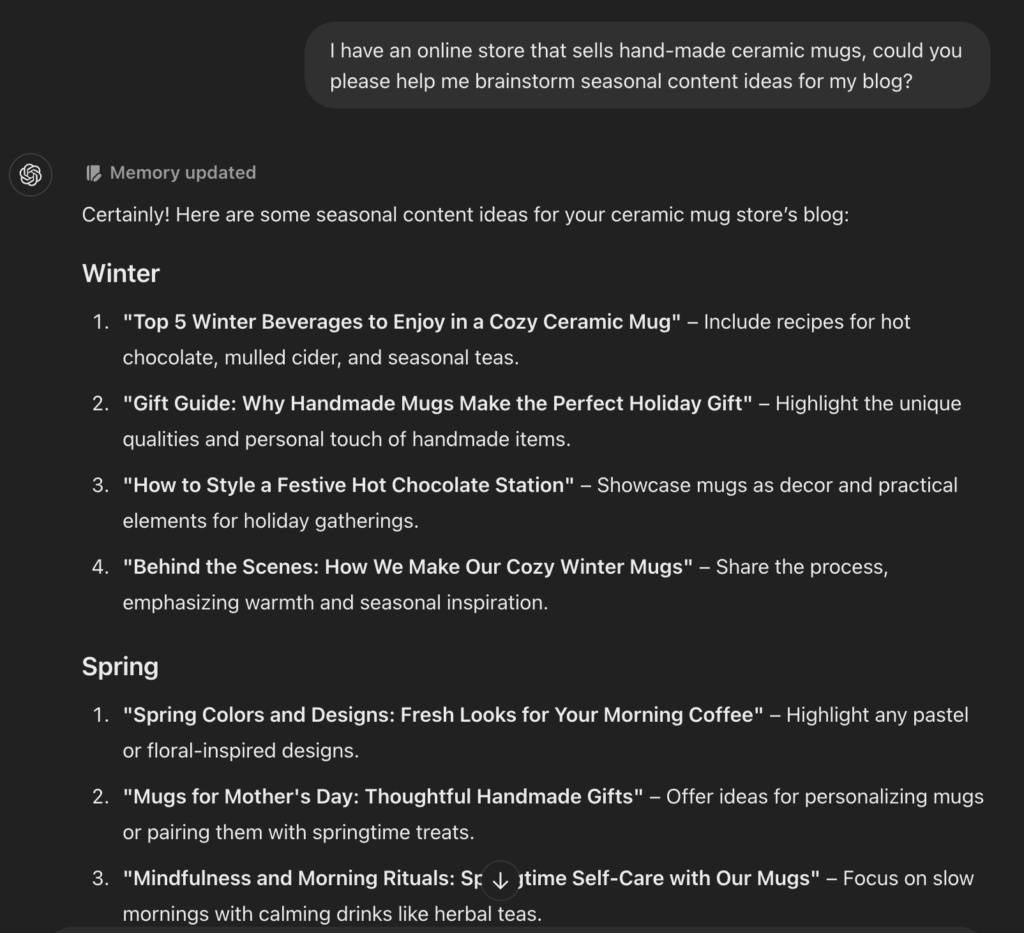
The secret is knowing how to “talk” to them. Vague prompts get vague results. Feed them the right information, and they’re invaluable.
The Bottom Line
There’s no doubt that AI is already having a major impact on eCommerce SEO. The retailers seeing the biggest gains, though, aren’t necessarily the ones with the biggest budgets—they’re the ones using AI strategically.
You don’t have to go all-in overnight. Start with your proven winners. Those product categories that consistently sell well? Make them sell better. Use AI tools to speed up routine tasks – generating basic descriptions, spotting gaps in your content, and finding the right keywords.
But bear in mind, you know your customers and products best. That’s why AI should complement your expertise, not replace it.