
Is longer content always better for SEO? Discover how to hit the perfect content functionality for rankings and conversions. Learn the art of writing puncher, more effective content.
“How long should it be?” When it comes to SEO, it’s a question as old as search engines themselves. Some say longer content wins, while others argue that brevity is the soul of SEO success. The truth? It’s a bit more nuanced than that.
Word count alone isn’t your golden ticket to the top of Google’s rankings. Sure, a 3,000-word masterpiece might dazzle, but if it doesn’t answer the reader’s query quickly and efficiently, what’s the point? In a world where attention spans rival that of a goldfish, crafting content that’s both engaging and to the point is the real magic.
Does Word Count Matter for SEO?
Ah, word count – the supposed holy grail of SEO success. It’s tempting to think that stuffing your site with 2,000 words per page will have Google rolling out the red carpet. But here’s the kicker: word count, on its own, doesn’t guarantee better rankings. Let’s unravel the mystery.
Understanding Word Count in SEO
It’s time to bust the myth: longer isn’t always better. Sure, some high-ranking pages boast epic-length content, but that’s not because of the word count alone. It’s because those pages provide value. Whether it’s a crisp 300-word answer or a detailed 3,000-word guide, content only performs well when it matches what the user is searching for.
Take “What time is it in London?” as an example. Nobody wants a dissertation about Greenwich Mean Time. A short, snappy response gets the job done – and Google knows it. Meanwhile, for complex queries like “How to start a successful e-commerce business,” you’ll need depth and nuance to satisfy the reader’s curiosity.
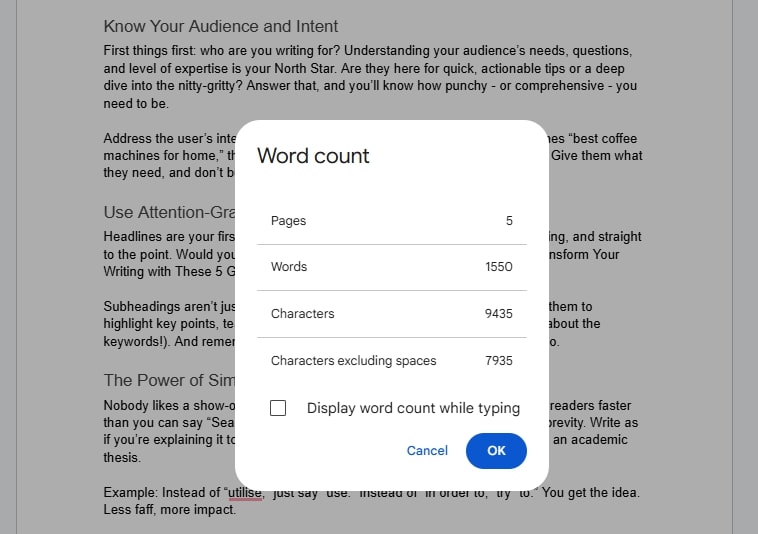
Factors That Matter More Than Length
All right then. If word count itself is not the most important factor in terms of SEO content, then what is? Well, at least a couple of things:
- Relevance to Search Intent: The most important metric. If your content doesn’t address the user’s query, no amount of waffle will save it.
- Content Depth and User Satisfaction: Cover the topic thoroughly for its scope. Shorter topics call for shorter content; meatier subjects demand more detail.
- Engagement Signals: Google’s looking at how long users stick around, how many pages they visit, and whether they’re sharing your content—all signs you’ve nailed it.
- Readability and User Experience: Pages that are easy to read, skim, and navigate will always outperform walls of text.
The key takeaway here is that word count isn’t a race to see who can churn out the most words. It’s about crafting content that’s right for your audience, their needs, and the context of their search. So before you start typing up War and Peace for your blog, ask yourself: Is this what my reader wants?
The Art of Writing Punchier Content
Let’s face it: no one’s got time for rambling prose, especially not your readers. Attention spans are shorter than ever, and the secret to engaging content isn’t padding your paragraphs – it’s packing a punch. So, how do you grab your audience by the eyeballs and keep them hooked? Let’s break it down.
Know Your Audience and Intent
First things first: who are you writing for? Understanding your audience’s needs, questions, and level of expertise is your North Star. Are they here for quick, actionable tips or a deep dive into the nitty-gritty? Answer that, and you’ll know how punchy – or comprehensive – you need to be.
Address the user’s intent like a detective cracking a case. If someone searches “best coffee machines for home,” they want recommendations, not a history of espresso. Give them what they need, and don’t bury the lede under mountains of fluff.
Use Attention-Grabbing Headlines and Subheadings
Headlines are your first impression – make them count. Think punchy, intriguing, and straight to the point. Would you click on “5 Ways to Make Your Writing Better” or “Transform Your Writing with These 5 Game-Changing Tips”?
Subheadings aren’t just for organisation; they’re a lifeline for skimmers. Use them to highlight key points, tease insights, or inject a bit of personality (don’t forget about the keywords!). And remember, search engines love them as much as readers do.
The Power of Simplicity
Nobody likes a show-off. Overly complex sentences and jargon can alienate readers faster than you can say “Search Engine Optimisation.” Instead, aim for clarity and brevity. Write as if you’re explaining it to your colleague by the coffee machine, not submitting an academic thesis.
Example: Instead of “utilise,” just say “use.” Instead of “in order to,” try “to.” You get the idea. Less faff, more impact.
Optimise Content Structure
Punchy content doesn’t mean skimping on structure. Keep things tidy and engaging by using:
- Short paragraphs: Nobody wants to read a wall of text. Break ideas into bite-sized chunks.
- Bullet points and lists: Perfect for delivering quick, digestible insights.
- Visuals: Charts, images, or videos not only break up the text but also keep readers engaged.
- White space: Give your content room to breathe – it’s easier on the eyes and mind.
Punchy writing isn’t about being brief for the sake of it – it’s about delivering the goods in a way that keeps your audience coming back for more. Master this, and you’ll have both humans and algorithms eating out of the palm of your hand.
Remember: the goal is to make your content irresistible to both readers and search engines. Structure it like a conversation, not a lecture, and watch your engagement metrics soar.
SEO Copywriting Tips for Better Engagement
Writing for SEO isn’t just about ticking off keywords like a to-do list; it’s about creating content that makes readers sit up, pay attention, and, crucially, stay on your page. Great copywriting doesn’t just inform – it inspires action. Ready to turn those clicks into captivated readers? Here’s how.
Remember to EEAT
When it comes to word count and E-E-A-T (Experience, Expertise, Authoritativeness, Trustworthiness), it’s not about how much you write but how well you demonstrate credibility and value. A 5,000-word post won’t impress Google or your readers if it’s stuffed with fluff and lacks authority. Instead, focus on showcasing your expertise by providing accurate, well-researched information, citing reliable sources, and addressing user intent with precision.
Whether your content is short or long, it should convey trustworthiness and authority through thoughtful insights, practical advice, and clear answers that make readers feel like they’ve landed in the right place.
Focus on Actionable Advice
People love content they can use. It’s all well and good explaining the theory behind a concept, but readers want to leave with something tangible. Give them tips, tricks, and step-by-step instructions they can apply immediately.
For example, if you’re writing about “how to increase website traffic,” don’t just talk about the importance of SEO. Suggest tools, highlight quick wins, or share strategies that have worked for others. Practicality is the secret sauce.
Use Data, Examples, and Stories
If you want to build trust and keep readers hooked, back up your points with hard facts and relatable examples. Statistics and case studies show you know your stuff, while stories make your content more human and engaging.
Imagine reading about how someone doubled their organic traffic in three months using a single SEO tweak – it’s a lot more memorable than vague advice, isn’t it? Pair your data with a bit of storytelling magic, and you’ll have your readers hanging on every word, wondering how on Earth you did it and if they can do the same.
Incorporate Natural Keywords Strategically
Yes, keywords are important, but nobody likes reading robotic, keyword-stuffed nonsense. Instead, weave your target phrases into the content naturally. Think of them as the seasoning, not the main course.
For instance, instead of stuffing “best coffee machines UK” awkwardly into every paragraph, try: “If you’re searching for the best coffee machines in the UK, look no further. Here’s what you need to know.” Smooth, right?
Pro Tip: Use variations and related terms to keep your content feeling fresh while still giving search engines what they need.
Encourage Interaction
Don’t just write at your audience – speak to them. Encourage comments, shares, or even just a click to another page on your site. Calls to action (CTAs) are your best friends here.
Examples:
“Have you tried these tips? Let us know in the comments!”
“Ready to boost your website traffic? Check out our guide here.”
“Love this article? Share it with your network!”
A well-placed CTA doesn’t just engage your audience—it keeps them on your site longer, which Google loves.
Make Your Words Count
When it comes to SEO, word count isn’t the be-all and end-all. It’s not about cramming your page with as many words as possible; it’s about creating content that resonates with your audience, answers their questions, and keeps them coming back for more.
So, when you combine relevant advice, data-driven insights, natural keyword use, and genuine interaction, your content stops being just another blog post – it becomes an experience. And don’t forget: punchy doesn’t mean shallow. With the right headlines, clear structure, actionable tips, and a sprinkle of storytelling, your content can be both captivating and concise.
So, is it time to rethink how you approach your next blog post? Ditch the obsession with word counts and focus on what truly matters: creating content that connects, converts, and climbs the rankings.