
The way we conduct online searches has changed dramatically over the years. From the short, almost robotic keyword-led searches of the 2000s to the local and question-based searches of recent years, how we search is constantly evolving.
And, supported by the progress of technology, voice search has removed the need to type entirely. Whether you’re asking Siri for directions or telling Alexa to add something to your list, talking to our devices is a huge part of everyday life for many.
Some see and treat this as just a cool new tech trick. But it’s more than that; it’s a golden opportunity for businesses to connect with people.
What is Voice Search Optimization (VSO)?
Voice Search Optimization (VSO) is the process of making your website and content more likely to appear when people use voice-enabled devices like phones, cars and smart speakers.
It’s the act of fine-tuning your message so that when someone speaks a question, Google Assistant, Siri, or Alexa instantly understands and gives them your information as an answer.
Voice queries are a whole different game from typing. We type with short phrases like “best coffee London,” but we speak using full, natural questions.
For example, “Hey Google, where’s the best coffee shop near me in London that’s open now?” These spoken questions are almost always longer and more specific, just like a real conversation.
Why Should I Care About Voice Search Optimization?
Whether you’re an agency or a brand, you should care about VSO because it’s changing how people discover information online. If you’re not ready, either you or your clients will be left behind.
In short, as people – customers – talk to their devices more, you need to make sure you’re being heard.
This means going beyond traditional SEO and creating content that answers those conversational questions. By having one eye on voice search, you’re giving your clients a huge advantage and keeping them visible in this new, voice-first world.
The Importance of Voice Search Optimization for SEO
Voice search isn’t just a fad; it’s a huge and growing part of online search. In 2024, over 8.4 billion voice assistants were in use worldwide—that’s more than the entire human population! This shows that people are comfortable using their voices to find things.
For SEO, this means the old playbook isn’t enough. Matching keywords isn’t enough when people are asking full, detailed questions. Plus, voice search is great for local queries.
Did you know 76% of voice searches are for things nearby? If you’re not ready to answer the “near me” questions, you’re missing out on customers who are ready to buy right now.
The SEO Benefits of Voice Search Optimization
Optimizing for voice search is hugely beneficial for SEO. First, it boosts brand visibility. When a voice assistant answers, it often pulls from a top-ranking page. Being that source offers direct exposure, building trust and authority.
Second, it leads to a better user experience. Voice search is about speed and convenience. Users want instant, relevant answers without scrolling. By giving clear, direct answers, you make it easy for users to find what they need, which means happier customers.
Finally, VSO gives you a competitive edge. While many are getting on the voice search bandwagon, many businesses are still playing catch-up. Being an early bird and focusing on voice allows you or your clients to stand out from the crowd. This can lead to more traffic, better leads, and a stronger market position.
Understanding the Voice Search Ecosystem
The world of voice search is a whole ecosystem with different technologies and user habits.
Voice Search Engines (e.g., Google Assistant, Siri, Alexa)
These are what most people think of. Devices like smart speakers and smartphone assistants use these to give direct answers to questions, often pulling from featured snippets. They are great for local search and simple tasks.
Generative AI Bots (e.g., ChatGPT, Gemini)
These are much more recent. They can’t search the web in the same way, but they can create detailed, conversational responses from the data they’ve learned. They can answer complex questions or explain things in detail.
User Behavior
How people use these tools is key. Regular voice assistants are for quick tasks (“Find a plumber”). But with generative AI, people look for deeper info or brainstorm ideas. You’d ask Google Assistant for the weather, but you’d ask ChatGPT to explain a complex topic.
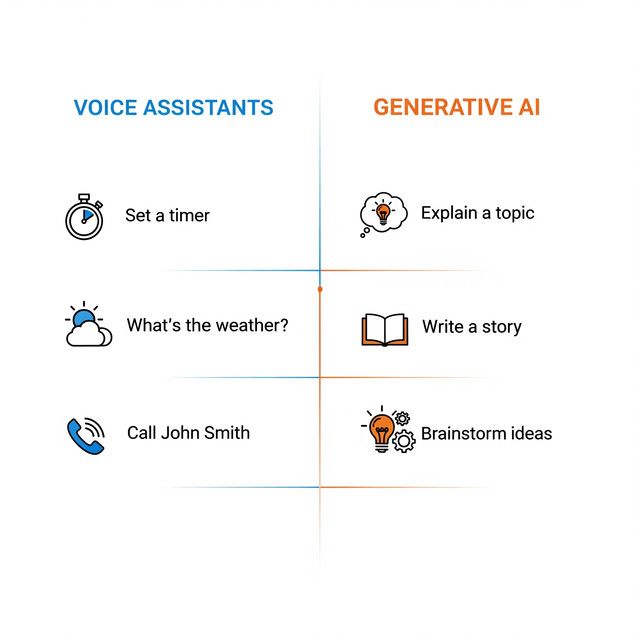
Comparing Traditional Voice Assistants & Generative AI
The 5 Pillars of Successful Voice Search Optimization
To master VSO, you need to focus on a few key areas that match how people talk and how voice assistants work.
- Conversational Keywords. Forget one or two-word keywords. Voice search uses long, conversational phrases—the kind you’d actually say. People ask full questions, so your content needs to answer them directly. Tools like Google’s “People Also Ask” can help you find the right questions.
- Local SEO. Many voice searches are local. Think, “Where’s the nearest hardware store?” To catch these, your client’s Google Business Profile must be perfect with updated info (Name, Address, Phone Number).
- Mobile-First Indexing. This is a must. Since most voice searches are on phones, your website has to be mobile-friendly. If it doesn’t look good on a phone, you’re at a big disadvantage.
- Page Speed. Voice search users want answers now. A slow website will send them away and hurt your rankings. Fast-loading sites are essential for a good voice experience.
- Schema Markup. This is a bit technical but important. Schema markup is code that helps search engines understand your content. It helps voice assistants pull out exact information and give those great “featured snippets” directly from your site.
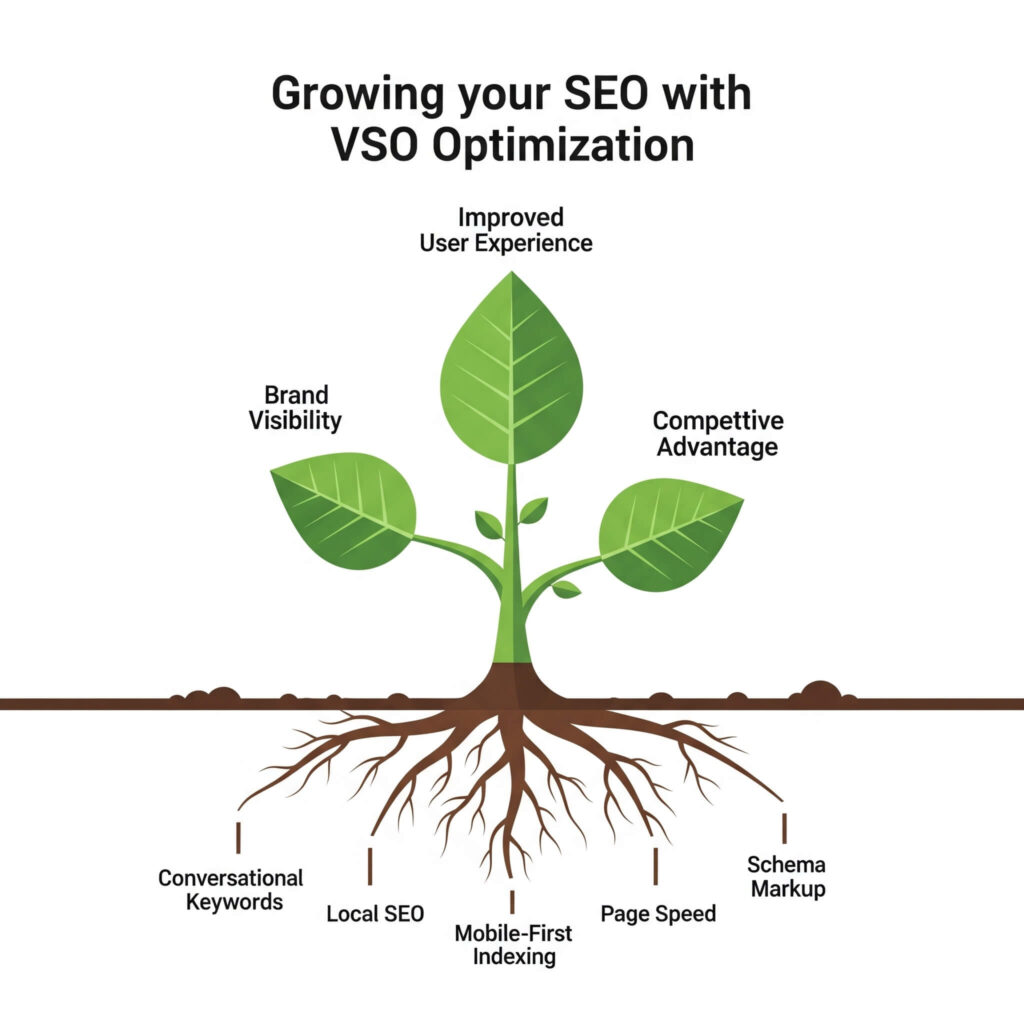
Growing your SEO with VSO Optimization
Measuring the Success of Voice Search Optimization
To see if your VSO efforts are having an impact, look at specific things:
- Voice Search Traffic: Is traffic from voice queries growing?
- Featured Snippet Clicks: How often does your content show up as a featured snippet?
- Local Search Performance: Are your clients ranking for “near me” questions?
- Conversion Rate: Are people who find you through voice search actually taking action?
Strategic Implications of VSO for PR & Marketing Agencies
For agencies, getting good at VSO is a strategic move they can’t ignore.
Better Brand Visibility
VSO opens up new ways for your clients to be found. By optimizing for conversational questions, you increase the chances of your brand being the direct answer a voice assistant gives. This builds trust and authority.
Improved User Experience
By focusing on VSO, agencies can make their clients look like customer champions. Giving instant, relevant answers to voice queries makes every interaction easy and satisfying, building loyalty and trust.
Competitive Advantage
The voice search world is still new, so there’s a huge opportunity for those who jump in early. Agencies that make VSO a core part of their work can give their clients a powerful edge.
Voice Search is Changing SEO
Voice search is changing SEO. And change brings opportunity for brands and agencies. The digital world is moving toward natural, conversational ways of finding information, and our strategies must keep pace.
By using conversational keywords, local presence, and a solid technical foundation, we can put our clients in the spotlight.
The future of search is voice-driven and powered by AI. Those that jump in early with VSO will build smart, future-proof strategies that stay ahead. It’s about being where your audience is, right when they need you. The time to optimize for voice is now.